

Last updated October 31, 2026
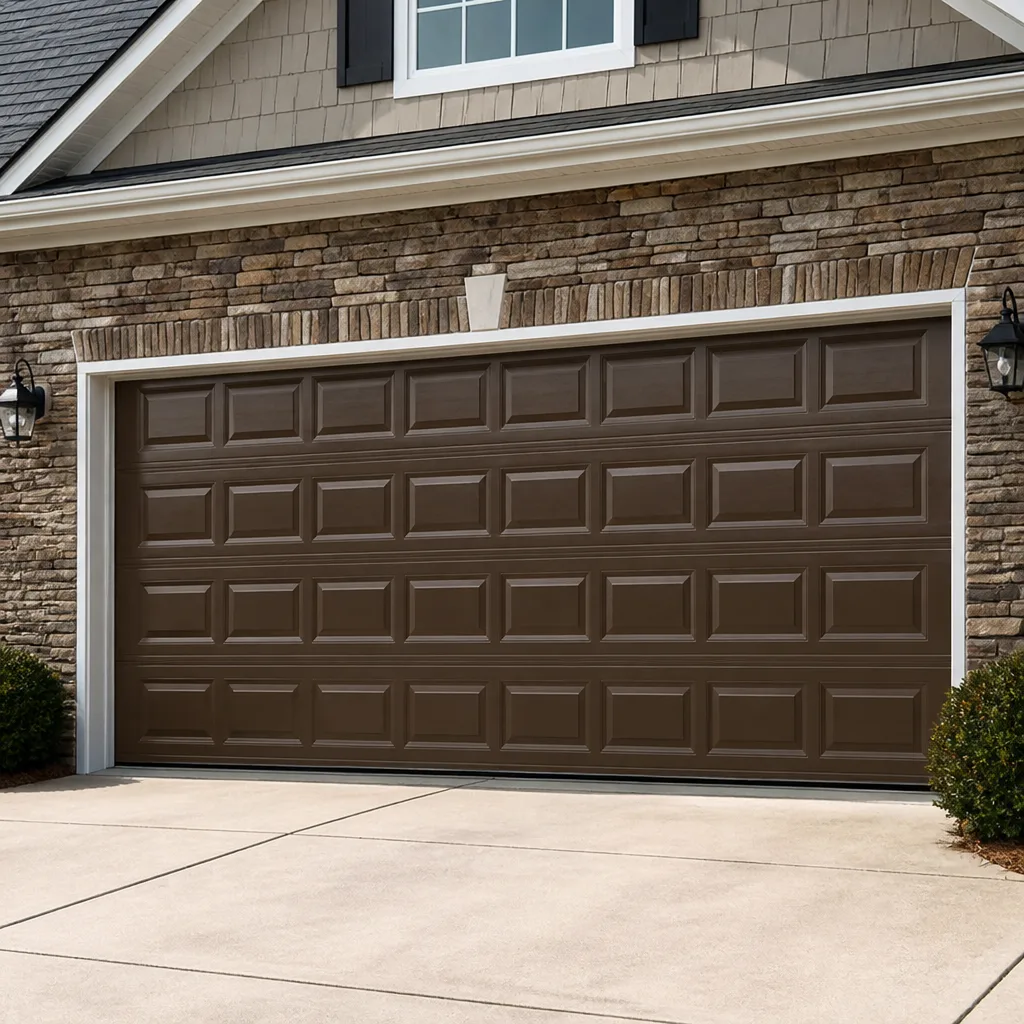 Raised-panel steel
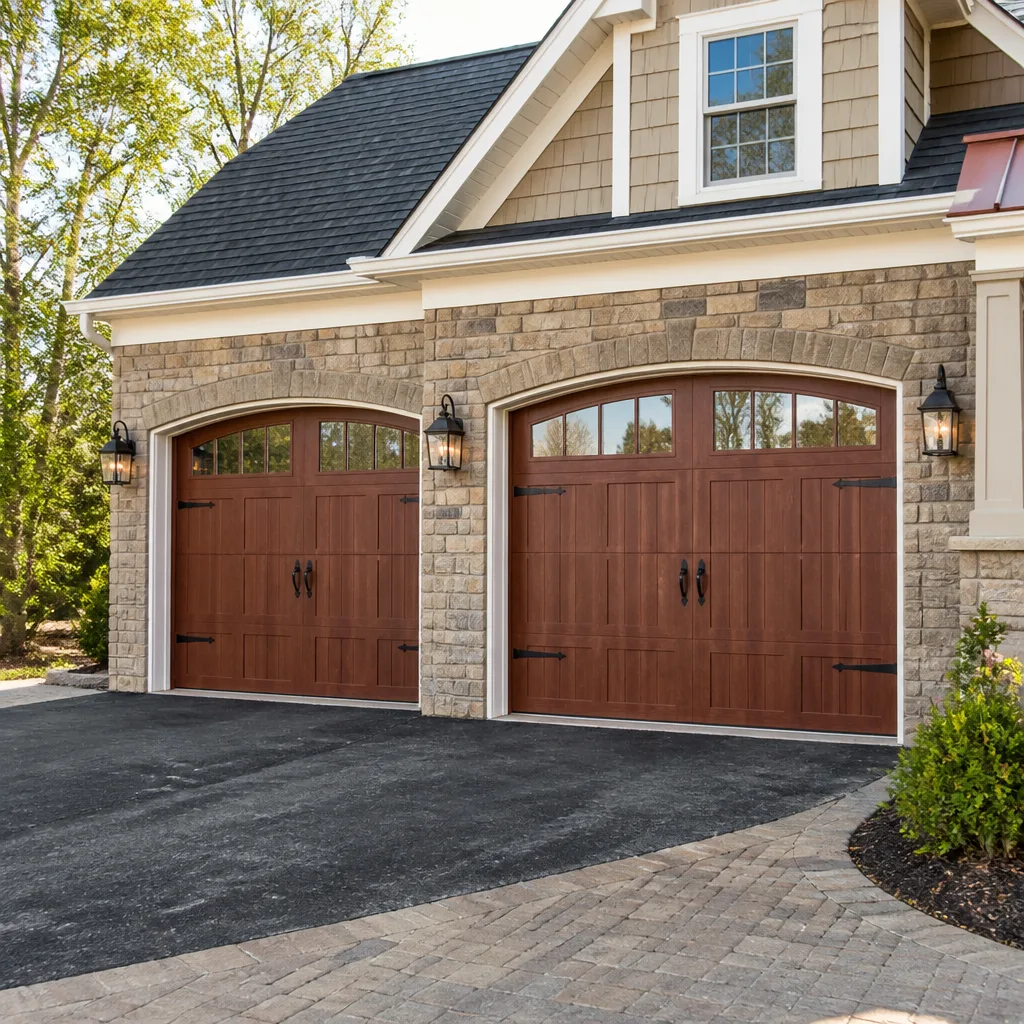 Carriage house
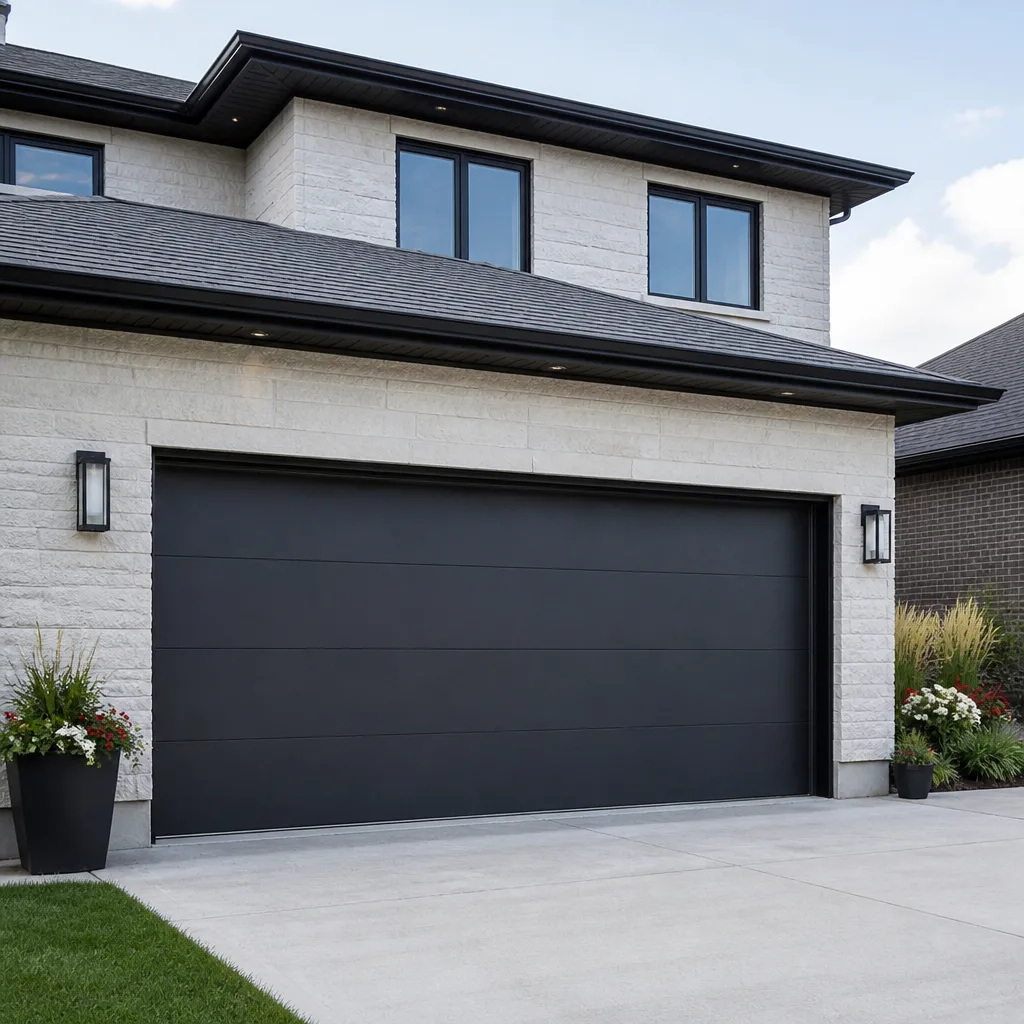 Modern flush
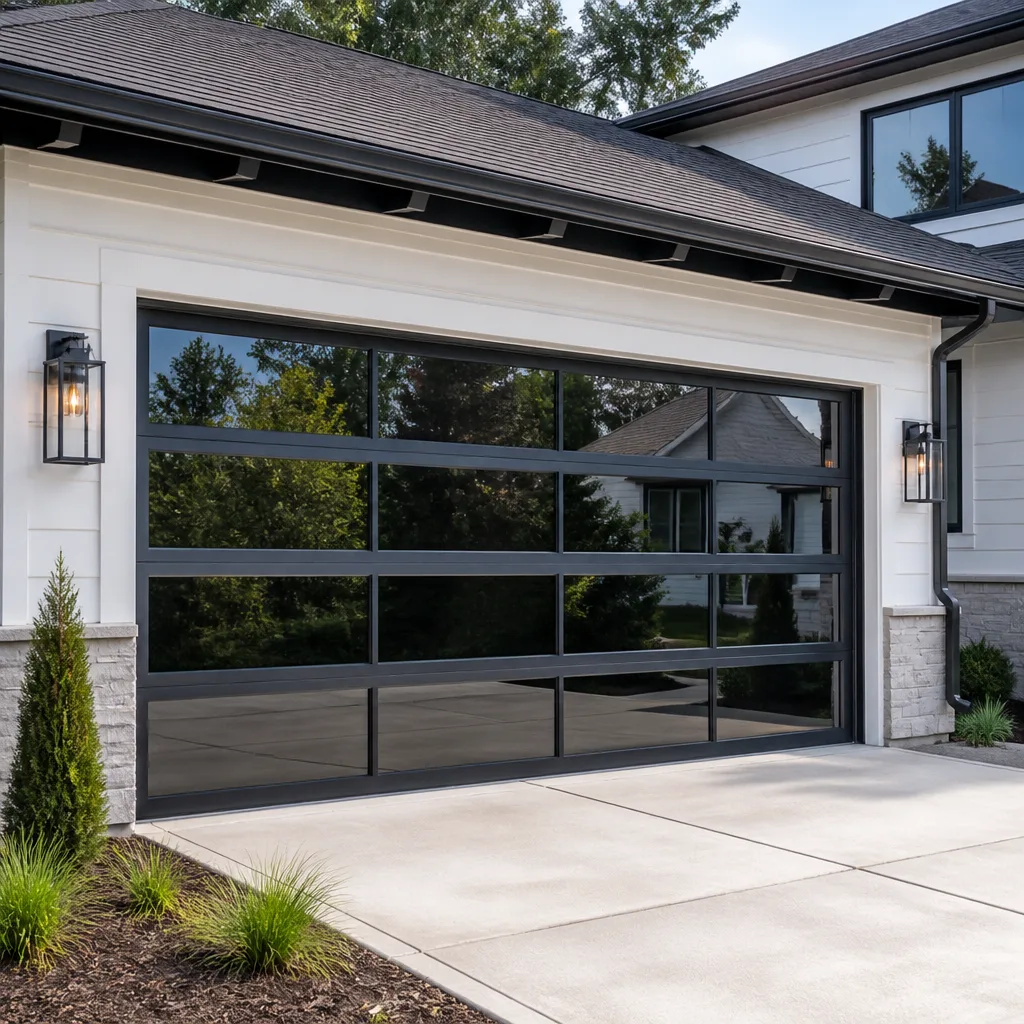 Full-view glass
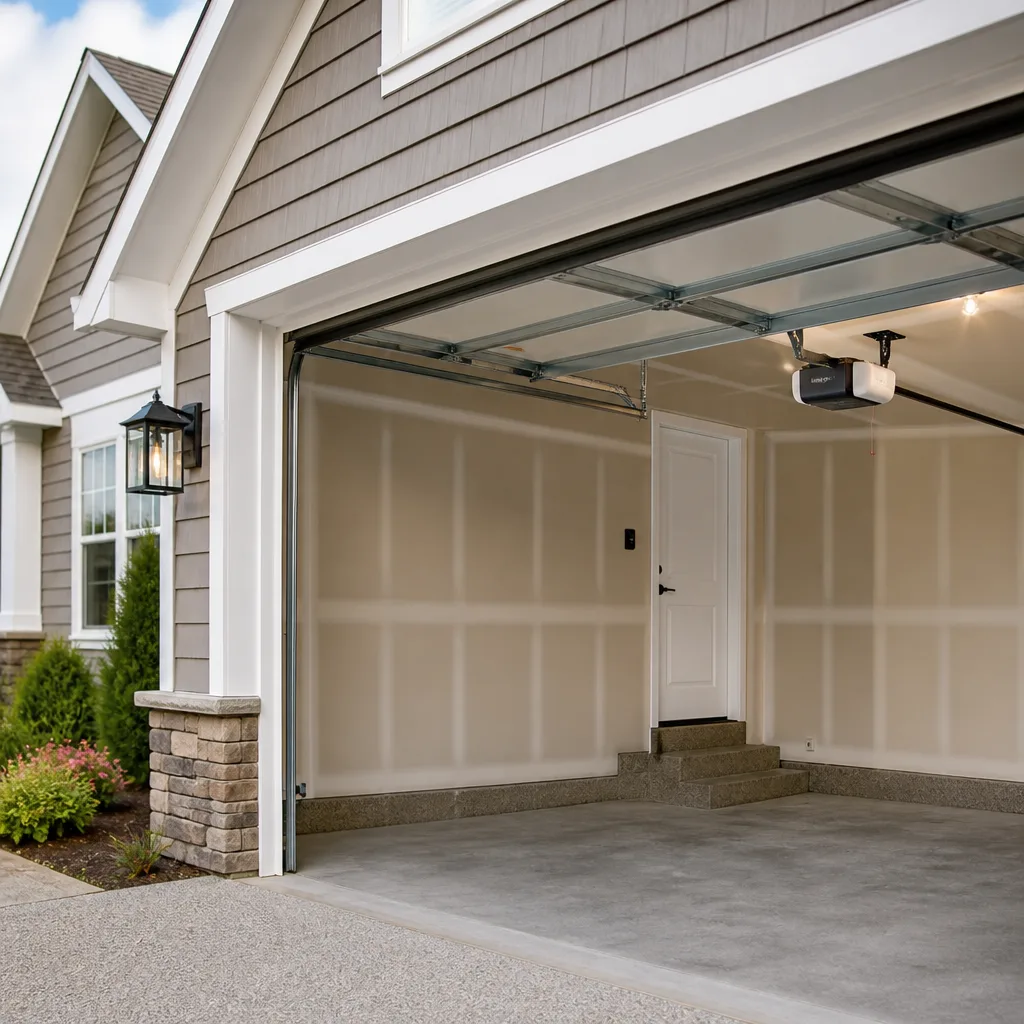 LiftMaster openers
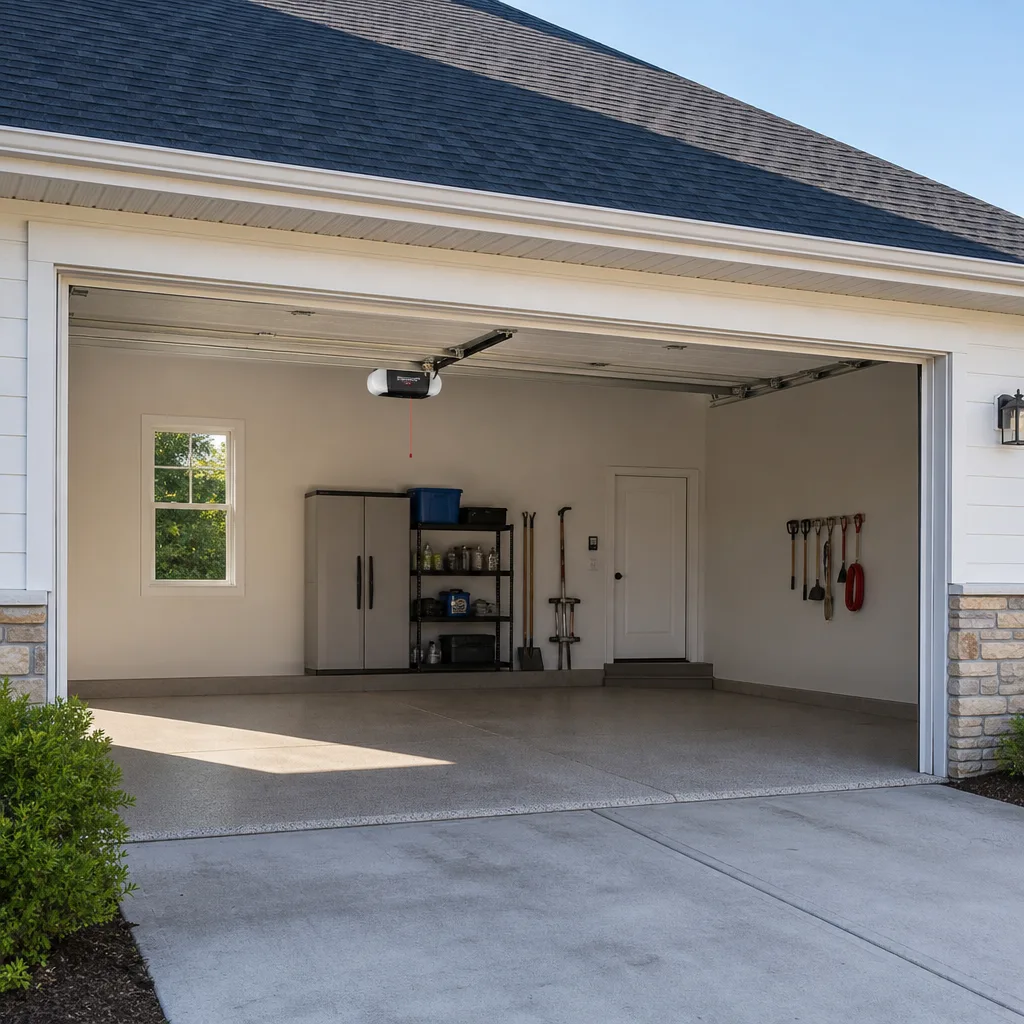 Chamberlain openers
Full 25-point door and opener safety check with every visit - springs, cables, rollers, tracks, and your LiftMaster or Chamberlain opener included
You get a price before we start. It does not change when the truck arrives.
Get your free estimateGarage Door Warning Signs: A Jacksonville Homeowner’s Reference Guide
In Jacksonville, a garage door rarely fails without announcing itself first. The problem is that most of those announcements arrive as small, forgettable changes: a new creak near the top of the track, a door that closes a half-second slower than it used to, a strip of rubber along the floor that’s pulled away from the concrete. This guide walks through the early warning signs we’ve learned to recognize after years of working on doors across the city, from Ortega to San Marco to Arlington. By the time you finish reading, you’ll know which sounds are harmless, which rust patterns are time bombs, and when a small fix now beats a big repair in August. Because in this climate, the gap between “that’s odd” and “the door won’t open” is shorter than most people think.
Quick Answer
The most common early warning signs of garage door failure in Jacksonville are a squeak or grind from the spring area, visible rust on springs or cables, a door that visibly shakes or hesitates on its way up, an opener that runs longer than it used to, and a floor seal that lets daylight or water under the door. Any of these can be fixed inexpensively if addressed within the first few weeks. Left alone in Florida humidity, they typically become a broken spring, a snapped cable, or a warped panel, which costs five to ten times more to resolve. No warning sign should be ignored for more than a month in this climate.
Styles & brands we work with
Table of Contents
- The Sound Profile: Squeaks, Grinds, and Pops Explained
- Rust on Springs and Cables: What’s Normal and What’s Fatal
- Panel Warping and the Jacksonville Humidity Problem
- Opener Behavior Changes That Precede Failure
- The Floor Seal Test: Water, Pests, and Energy Loss
- The Balance Test Every Homeowner Should Know
- Roller Noise and Track Wear: A Slow-Moving Problem
- Common Mistakes to Avoid
The Sound Profile: Squeaks, Grinds, and Pops Explained
Every garage door makes some noise. The key is knowing which noises are normal and which ones are your door telling you something specific. In our experience working on doors across Jacksonville, homeowners tend to lump all door sounds into one category: “it’s making a noise.” But the frequency, pitch, and location of a sound tells you a lot about what’s failing and how urgently you need to address it.
A high-pitched squeak that happens only when the door moves is almost always a lubrication issue. The metal-on-metal contact points, typically the hinges and the spring coils, dry out faster in Jacksonville’s salt-adjacent air than they do inland. A door that hasn’t been lubricated in 12 months or more will develop a squeak that most people describe as “the door sounds dry.” This is the cheapest fix in garage door repair: a proper silicone-based lubricant applied to the spring, hinges, and rollers usually eliminates the sound in minutes. What matters is catching it early. A dry spring that squeaks for six months develops surface rust, and a rusty spring is a spring that’s losing its structural integrity. The squeak is not the problem. The squeak is the warning.
A grinding or metallic scraping sound is different. Grinding typically signals a roller that’s no longer rolling: the bearing inside the roller has seized, and now you’re dragging metal across the track. On doors that get daily use, rollers wear out every five to seven years. In Jacksonville, the added humidity shortens that lifespan because the bearing lubricant breaks down faster. A grinding door still opens and closes, which is why so many homeowners ignore it. But every cycle drags a non-rolling roller across the track, wearing a groove into the metal. Replace the roller, and the grind disappears. Ignore it, and you’re looking at track replacement, which is a much larger job.
A popping or snapping sound is the one that should stop you cold. When a torsion spring begins to fracture, the individual coils separate from one another, and each separation can create an audible pop. Some homeowners describe it as “the door sounds like it’s cracking.” If you hear a pop from the spring area and the door still works, that spring is running on borrowed time. A broken torsion spring is the single most common emergency repair we handle in Jacksonville, and in almost every case, the customer reports hearing something strange in the weeks before the break. The spring didn’t fail silently. It popped. Nobody knew what it meant.
What to listen for
- Squeak during movement: Dry spring or hinges. Lubricate. If the squeak remains after lubrication, you have a hinge with internal wear, and that hinge should be replaced.
- Metallic scrape or grind: Seized roller or misaligned track contact. Inspect the rollers while the door moves. Any roller that slides instead of rolls needs replacing.
- Pop, snap, or crack from the spring area: Torsion spring coil separation. Stop using the door and call a professional immediately. A spring under tension that fails while the door is moving can cause serious injury. Do not attempt to inspect or adjust a torsion spring yourself: the stored energy in a wound spring can release with enough force to break bone.
- Rhythmic thumping or banging: Usually a panel that’s come loose at the hinge point, or a door that’s out of balance and hitting an obstruction in the track. This is a structural issue that needs a pro to assess.
If you’re hearing any of these sounds from a Chamberlain or Genie door, the diagnosis process is the same, though the specific component locations vary by model. We work on both brands regularly, and the failure patterns are consistent across manufacturer lines: sounds don’t lie.
Rust on Springs and Cables: What’s Normal and What’s Fatal
Jacksonville’s humidity means rust on garage door hardware is not a matter of if, it’s a matter of when and how much. The critical skill is telling the difference between surface oxidation that responds to treatment and structural rust that means the component has already begun to fail. The distinction is not subtle once you know what to look for, and catching it early is the difference between a simple service call and a full spring or cable replacement.
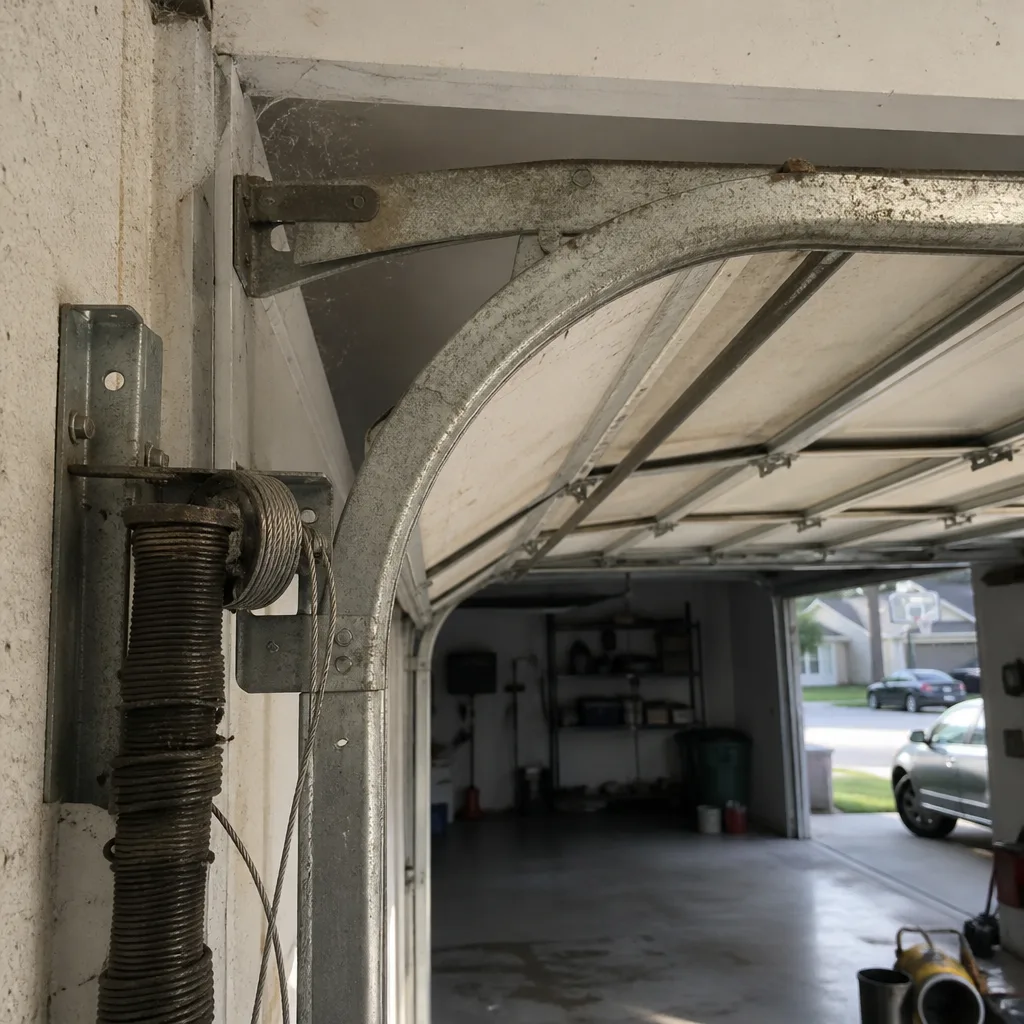
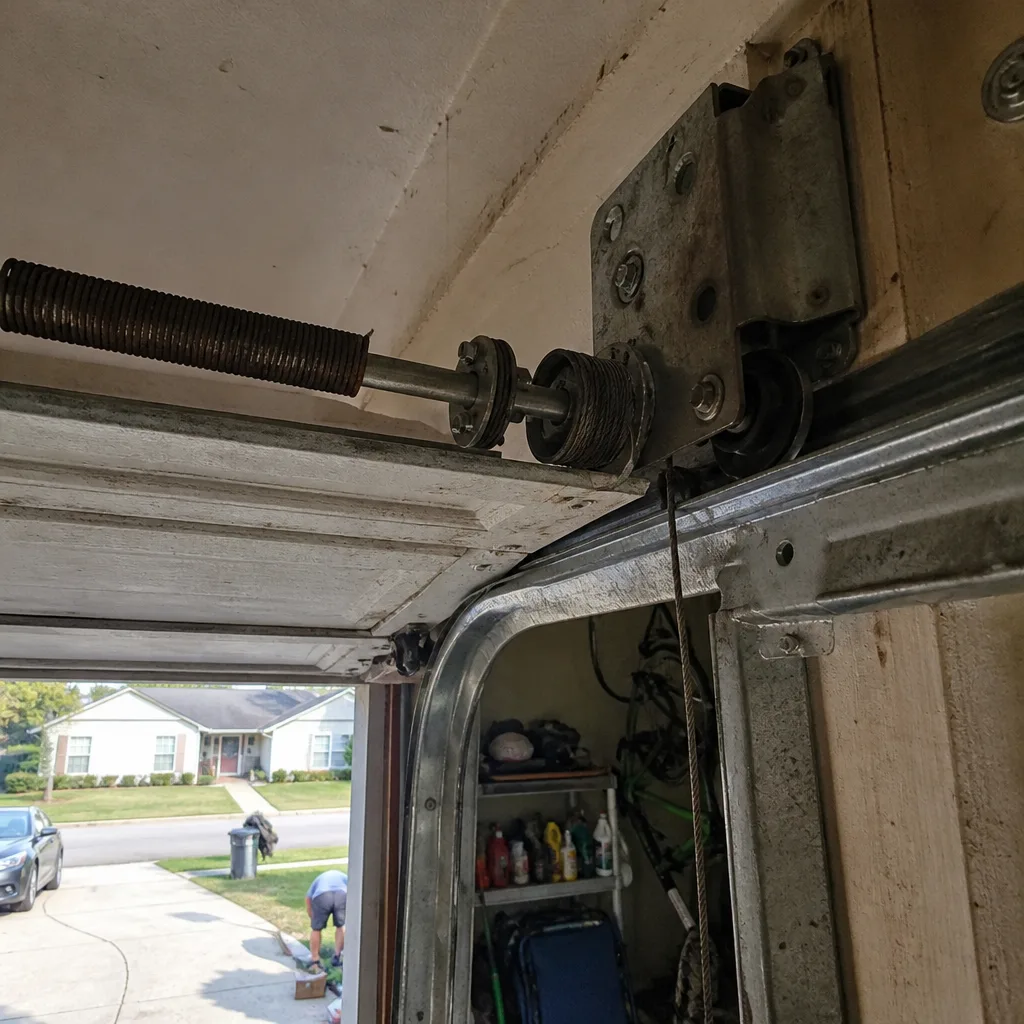
Surface rust on a torsion spring appears as a light orange or reddish-brown dusting across the coils. It’s uniform, it doesn’t flake, and it wipes away partially when you run a finger across it. This is typical for Jacksonville doors that are three to five years old. Surface rust on a spring means the protective coating has worn off and the metal is beginning to oxidize. What it doesn’t mean is that the spring is about to break. In most cases, we can clean surface rust off a spring, apply a proper rust-inhibiting lubricant, and give the spring several additional years of life. The key is that surface rust is addressed promptly. Left untreated, it eats deeper.
Pitting or flaking rust looks different. The orange coating is thicker, often raised in places, and flakes off in small chunks when touched. Pitting means the rust has started to create microscopic irregularities in the metal surface, and those irregularities become stress concentration points. A pitted torsion spring is a spring that has begun to weaken, and in our experience, a pitted spring in Jacksonville typically has less than a year of remaining life, often far less. Once pitting has developed, cleaning and lubricating won’t fix the underlying structural damage. The spring needs to be replaced, and this is not a DIY job under any circumstances.
Cable rust is a different animal. The lift cables on a garage door are made of braided steel strands, and once rust penetrates past the outer strands, those individual wires begin to fracture. You can often see the damage if you know what to look for: a cable that looks “fuzzy” in one spot, where broken wire ends have separated from the bundle. A rusted cable with visible fraying is an immediate replacement candidate. Cables on garage doors carry enormous tension, and a cable that lets go while the door is operating will send the door crashing down. If you see fraying or significant rust on your cables, stop using the door and call for service. On doors in neighborhoods near the Intracoastal, like San Pablo or Beach Haven, the salt-laced air accelerates cable rust faster than in areas further inland like Mandarin or Oakleaf. The same cable might last fifteen years in one part of Jacksonville and seven in another. That’s not an excuse to skip inspection. It’s a reason to inspect more often.
Quick Rust Assessment
- Light, even orange dusting on springs: Surface rust. Clean and apply rust-inhibiting lubricant. Service call, not an emergency.
- Thick, flaking, or pitted rust on springs: Structural weakening has begun. Plan for spring replacement.
- Rust with visible fraying or broken wire ends on cables: Emergency. Stop using the door and call for service today.
- Rust on hinges and brackets: Usually cosmetic, but hinges with rust on the pivot pin should be replaced: the rust adds friction, accelerating wear on the rollers and track.
Most homeowners never look at their springs. The spring sits right above the door, in plain view, and the only reason to avoid looking at it is not knowing what rust means. Now you do.
Panel Warping and the Jacksonville Humidity Problem
If your garage door has wood or wood-core panels, Jacksonville’s humidity is actively working against you. The moisture content of the air in Northeast Florida averages over 70% for most of the year, and during the summer months, that number spikes higher. Wood absorbs moisture. When wood absorbs moisture unevenly, it warps. And the panels that take the worst beating are the bottom two, which is exactly where most homeowners notice the problem first: a door that no longer sits flush against the frame, or a panel that appears to bow outward when viewed from inside the garage.
The bottom two panels fail first for a simple reason: they’re closest to the ground. Rain splash-back from the driveway, flooding during summer downpours, and the general humidity that pools near the concrete all contribute to a higher moisture load on the lower sections of the door. The bottom panel also carries the weight of the weight of the panels above it when the door is opening, so a moisture-weakened bottom panel is both warping and bearing load. It’s a compounding problem.
The early warning sign of warping is often visible before the warp itself is obvious. Look at where the bottom panel meets the weatherstripping along the side of the door opening. If you see light coming through a gap that didn’t exist before, or if the panel seems to be pulling away from the strip on one side, that’s the first stage of warping. Another early indicator is the door’s behavior during travel: a warped panel can shift subtly in the track, causing a small sideways jump or hesitation as the door moves through the curve. Homeowners describe it as “the door kind of shudders partway up.”
On steel doors with a polyurethane or polystyrene core, moisture intrusion can still happen, but the failure mode is different. Water gets in through small gaps around the panel edges, and over time, the moisture degrades the bond between the steel skin and the interior core. The result is a panel that sounds “dead” when tapped, instead of solid. A delaminated panel loses rigidity and eventually sags, and once delamination starts, patching is not a lasting fix. The panel needs replacement.
Amarr and Clopay both make doors designed for humid climates, with treated wood cores and moisture-resistant barriers, but no door is immune to standing water. The most common cause of bottom-panel damage we see in Jacksonville is a failed floor seal that let water pool against the panel after a heavy rain. Which brings us to the next warning sign.
Opener Behavior Changes That Precede Failure
Your garage door opener is a small electric motor with a control board, a set of sensors, and a drive mechanism that moves your door up and down. It’s designed to run for thousands of cycles, and one cycle should take roughly the same time every time. When the opener starts behaving differently, it’s almost always a sign that something has changed in the system: either the opener itself is failing, or the door it’s lifting has developed a problem that’s putting extra strain on the motor. Learning to read those behavior changes can save you from being locked out of your garage on a weekday morning.
The door travels slower than it used to. If your opener used to move the door from closed to open in about 12 to 15 seconds and now takes noticeably longer, the motor is working harder than it should. The most common causes are worn rollers adding friction, a door that’s out of balance and requiring more lifting force than normal, or a drive mechanism (belt, chain, or screw) that’s wearing out. On belt-drive Chamberlain openers, the belt itself rarely fails, but the sprocket that drives it can wear. On Genie screw-drive models, the screw can accumulate debris that increases resistance. The slower travel speed isn’t the problem itself. It’s the symptom, and the motor is working overtime to compensate. Left unaddressed, that overtime becomes a burned-out motor.
The door reverses unexpectedly during descent. Every modern opener has a force-sensitivity setting: if the door encounters resistance on the way down, the opener reverses to prevent damage or injury. A door that occasionally reverses mid-descent for no visible reason is usually reacting to something: a spot of increased friction in the track, a roller binding, or a door that has fallen slightly out of balance and is now descending with too much force. Occasionally, the safety sensors at the bottom of the door opening are misaligned, and the opener interprets a brief break in the sensor beam as an obstruction. The fix could be a simple sensor realignment or a track adjustment. But the door reversing itself is not “just being finicky.” It’s the safety system doing its job. The underlying issue still needs to be found.
The opener runs for several seconds after the door stops moving. In a healthy system, the opener motor stops at almost the same moment the door reaches its fully open or fully closed position. If you hear the motor still running or humming after the door has visibly stopped, the travel limits have drifted out of adjustment, and the opener is continuing to push or pull against a door that can’t move further. This puts serious strain on the drive mechanism and, more critically, on the door itself. Continuing to operate the door with misadjusted limits can bend panels, damage the track, and shorten opener life significantly. If you own a Craftsman or Chamberlain opener more than five years old, limit drift is one of the most common problems we diagnose in Jacksonville homes, and it’s a straightforward fix when caught before damage accumulates.
The wall console or remote works intermittently. This is one of the few opener problems that’s usually isolated to the opener itself rather than the door. Intermittent response from a wall button or remote often points to a failing logic board, especially on older units that predate the current generation of smart-enabled openers. On Wi-Fi-enabled models, intermittent behavior can also be a sign of network interference or firmware issues. Before assuming the worst, check the simple stuff: the battery in your remote, and whether the wall console’s wiring connection has come loose. If those check out and the behavior persists, the opener likely needs service. Opener repair is a specialty of ours precisely because these electrical and logic-board issues are a different skill set from spring and cable work.
The Floor Seal Test: Water, Pests, and Energy Loss
The rubber strip along the bottom of your garage door is called the weatherstripping, or the bottom seal. It’s a U-shaped strip of rubber or vinyl that runs the width of the door, and it has one job: to close the gap between the bottom panel and the uneven surface of your garage floor. When that seal fails, Jacksonville’s rain, humidity, and pest population all find their way into your garage. The seal is one of the cheapest components on your door, and the damage from a failed seal is among the most expensive to repair.
How to test your floor seal:
- Close the garage door completely and turn on the garage lights.
- Sit or kneel near one corner of the door and look along the bottom edge at floor level.
- Look for any place where light is visible under the door. The seal should make contact with the floor across the entire width of the opening.
- Run your hand (carefully) along the inside of the door at the bottom, feeling for gaps where the seal has pulled away from the door or where the seal itself has cracked, flattened, or torn.
- After a heavy rain, check for water that has seeped under the door and collected near the interior edge of the concrete pad.
Light under the door means water gets under the door. Water under the door means the bottom panel sits in moisture every time it rains, which accelerates the panel warping and delamination issues we covered earlier. It also means that during Jacksonville’s summer afternoon downpours, your garage floor becomes a shallow pond, and anything stored on that floor is at risk.
The pest problem is real. Northeast Florida is home to a healthy population of cockroaches, silverfish, ants, and the occasional snake, all of which are more than happy to use a quarter-inch gap under a garage door as an entry point. A broken or flattened seal is an open invitation. Homeowners in older Jacksonville neighborhoods with mature tree cover, like Riverside and Avondale, report more pest pressure than those in newer developments, and the garage door seal is the first line of defense.
The energy angle is also worth considering. If your garage is attached to your home, the garage is part of your home’s thermal envelope, even if it’s not air-conditioned. A failed seal allows hot, humid outside air to push in around the door, and that moisture load transfers through the shared wall into your living space. A functional bottom seal doesn’t transform an unconditioned garage into a conditioned space, but it does reduce the amount of moisture your home’s HVAC system has to handle, and in a city where dew points stay above 70 degrees for months on end, every percentage point counts.
Bottom seals cost almost nothing and take a technician minutes to replace. If your seal fails the light test, it’s the cheapest preventive fix in this entire guide.
The Balance Test Every Homeowner Should Know
Your garage door’s springs are designed to offset the weight of the door. A properly balanced door should be easy to lift by hand, and it should hold its position when opened halfway and released. When the springs begin to weaken, which happens gradually as they age, the opener takes on more and more of the lifting work. That added strain shortens opener life and, eventually, the weakened spring fails altogether, usually at the worst possible moment. The balance test is how you catch a weakening spring before it breaks.
- Close the garage door completely.
- Pull the red emergency release cord on the opener to disconnect the door from the opener carriage. This allows the door to be moved by hand.
- Lift the door manually to the halfway point. A balanced door should hold at that position without falling or rising on its own.
- Release the door slowly. If it stays roughly in place, your springs are doing their job. If it drifts downward with noticeable speed, the springs are weakening and compensating less than they should. If it slams or falls quickly, the springs are near failure.
- Reconnect the door to the opener by pressing the wall button, which should pull the carriage back into engagement automatically.
Important safety note: The balance test involves moving the door manually, but it does not require touching or adjusting the springs. Never attempt to adjust, wind, or remove a torsion spring yourself. Torsion springs are wound under enormous tension, and the release of that tension can cause catastrophic injury. The balance test gives you diagnostic information. It does not authorize a DIY repair.
If your door fails the balance test, the springs need attention. Sometimes the fix is a minor adjustment. More often, on doors that have been in service for seven to ten years in Jacksonville’s climate, the springs have reached the end of their designed cycle life and need replacement. A spring’s cycle life is measured in open-close cycles, not years, which is why a busy household might wear out a spring in six years while a vacation home’s spring lasts fifteen. The balance test is how you find out, and it’s a two-minute check worth doing twice a year.
Roller Noise and Track Wear: A Slow-Moving Problem
Rollers are the small wheels that connect the door to the track and guide the door through its up-and-down travel. Most residential garage doors have ten or twelve rollers. They’re easy to forget about because they’re small and, when they’re working correctly, they’re silent. But a single failed roller changes the way the entire door moves, and because the door is a single rigid structure, one bad roller can create wear patterns that spread to the other rollers, the hinges, and the track itself.
Steel rollers without sealed bearings are the most common type on builder-grade doors. As the bearing lubricant dries out, the roller starts to slide instead of spin, and sliding metal beats up the inside of the track. The telltale sign is a metallic scraping sound that’s localized to one section of the door’s travel, not present through the entire cycle. If the scrape happens at the same point in the travel every time, it’s usually a single roller or a single section of track. If the scrape happens throughout the entire cycle, multiple rollers have likely failed.
Nylon rollers with sealed bearings last longer and run quieter, which is why we recommend them on replacement jobs. But even nylon rollers wear out eventually, and the warning signs are quieter: a subtle grinding noise, or a slight sideways wiggle in the door as it moves through the curve. You can inspect the rollers visually from inside the garage. Look at the wheels while the door moves, and note any roller that isn’t turning. A roller that slides is done.
Track wear is the long-term consequence of ignored rollers. The track is a formed steel channel, and it can tolerate a lot of contact, but a sliding roller grinding against the same spot for months will carve a groove. Once a groove exists, even a new roller will catch on it, and the only permanent fix is track replacement. Track replacement is not a small job: it requires removing the door panels, realigning the new track, and resetting the entire system. Replacing a $12 roller is simple. Replacing a $400 track is not.
If you can’t tell whether a roller is rolling or sliding, give us a call. This is exactly the kind of diagnostic work we handle as part of our Garage Door Repair in Jacksonville service, and catching a roller problem early keeps the repair small.
Common Mistakes to Avoid
- Lubricating a grinding door instead of fixing the roller. Lubricant reduces friction, which is helpful for a dry hinge, but a seized roller needs replacement, not spray lubricant. Adding lubricant to a failed roller hides the sound for a week or two while the roller continues to damage the track.
- Ignoring a squeak because “it still works.” In Jacksonville’s humidity, a squeaking spring is rust beginning to form. The $15 lubrication call becomes a $200 spring replacement if it’s ignored through one rainy season.
- Treating rust as purely cosmetic. Surface rust can be cleaned and treated. But assuming all rust is surface rust is how we end up replacing springs that could have been saved. Check for pitting and flaking, and act accordingly.
- Spraying WD-40 on garage door components. WD-40 is a solvent and moisture displacer, not a long-term lubricant. It strips away whatever lubricant remains and evaporates quickly, leaving the metal drier than before. Use a proper silicone-based garage door lubricant, or have a technician apply it during a service visit.
- Attempting to adjust or replace a torsion spring without training. This is the single most dangerous DIY repair in residential property maintenance. Torsion springs store enough energy to cause severe injury or death. A spring replacement costs a few hundred dollars. An emergency room visit costs more, and that’s the best-case scenario.
- Waiting until a cable snaps to call for service. Rusted or frayed cables give visible warning before they fail. A cable that snaps while the door is in motion can send the door crashing down. If you see fraying, call immediately.
- Ignoring a door that fails the balance test because “the opener still gets it up.” An opener can force a heavy, unbalanced door up for months or years. It’s not supposed to. Every cycle is wearing out the motor and the drive mechanism faster than designed. The door still opens, so the customer assumes everything is fine, until the opener burns out or the spring finally lets go.
See the difference
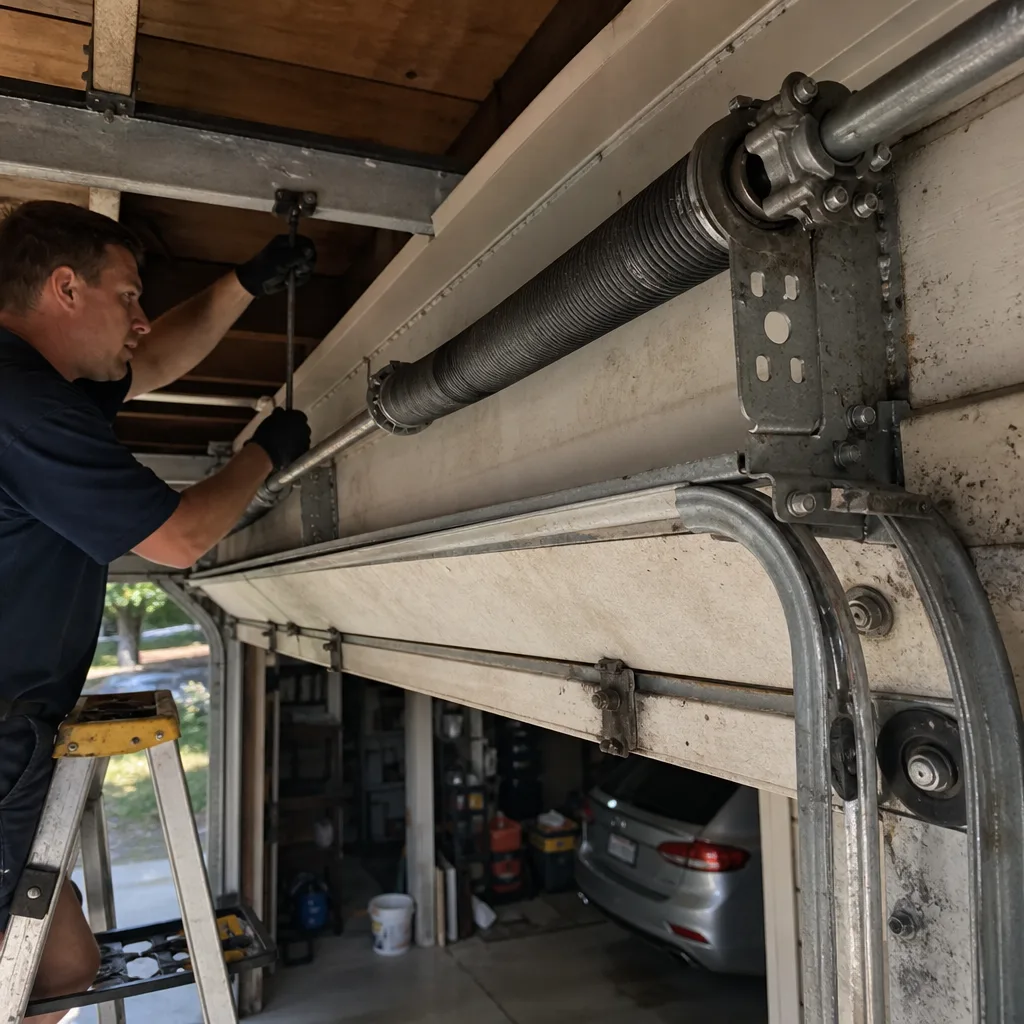 Before
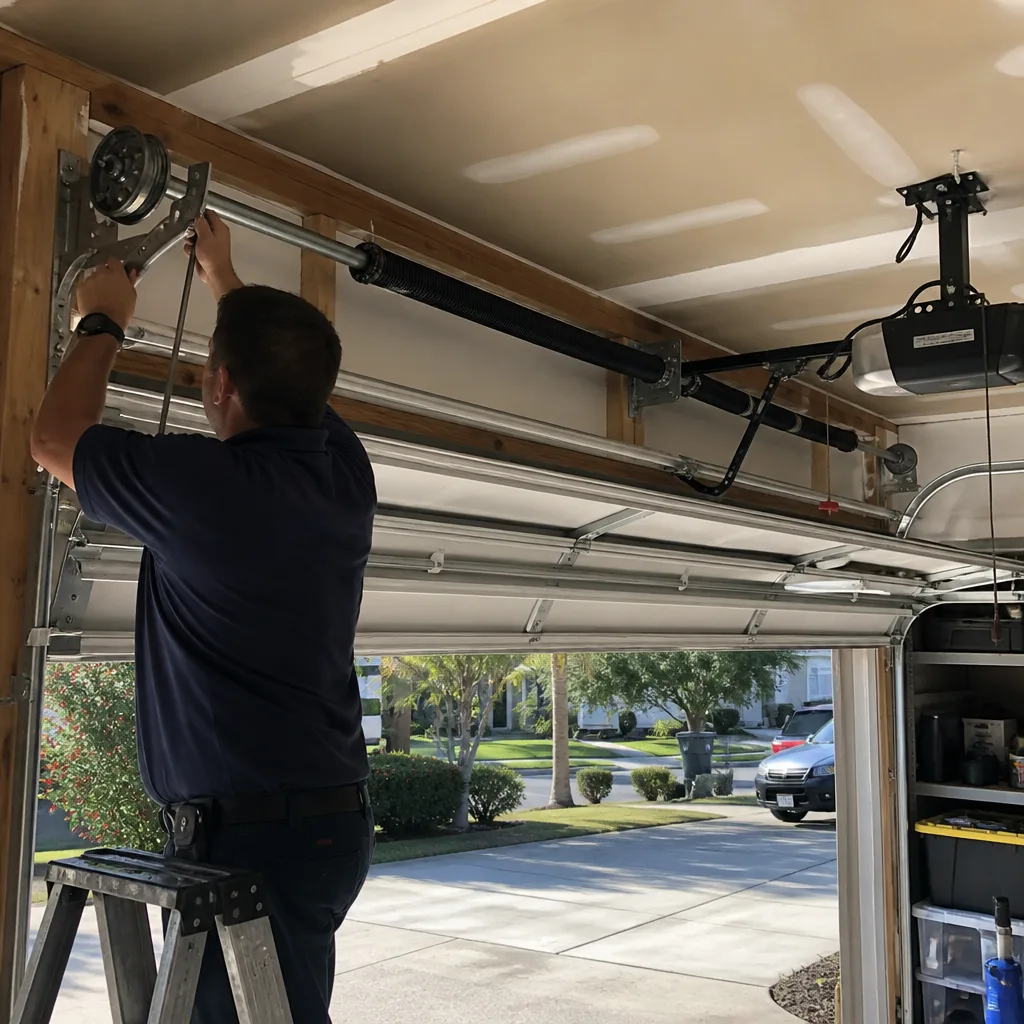 After
 Before
 After
 Before
 After
When to Call a Professional
Some warning signs are informational: you’ve learned what a squeak means, and you’ll keep an eye on it. Others are action items. Call a professional when you hear a pop from the spring area, when you see fraying or deep pitting rust on your cables or springs, when your door fails the balance test, when a roller has seized, or when your opener’s behavior changes in any of the ways described above. These are not conditions that resolve themselves. They are conditions that compound. In Jacksonville’s climate, the compounding happens faster than in most parts of the country because heat and humidity accelerate the aging of every metal component. If you’re not sure whether your door’s warning signs are informational or actionable, the safest move is to ask. Main Street Garage Door Repair offers free estimates in Jacksonville, and we’ll tell you if a repair is actually needed or if your door has more life left in it. Call (833) 467-4139 and we’ll take a look. Garage Door Opener Repair in Jacksonville is a core part of what we handle, from older Craftsman and Genie units to current smart-enabled openers, and Garage Door Installation in Jacksonville is an option when a door has reached the end of its structural life and repair no longer makes financial sense.
Frequently Asked Questions
If your garage door spring is about to break, you’ll usually notice one or more of these signs: a popping or snapping sound from the spring area while the door moves, visible rust that has progressed to pitting or flaking, a door that fails the balance test by drifting downward when opened halfway, or a gap that has appeared in the spring itself. If you see a physical gap in the spring, it has already broken, and the door should not be operated. Call (833) 467-4139 for an inspection.
In Jacksonville, garage doors sound different in summer because heat and humidity change the way metal components interact. Metal expands in heat, which can tighten clearances in the track and make existing friction louder. Humidity accelerates corrosion on springs and bearings, which adds roughness to surfaces that were previously smooth. The sound you hear in August is often the early-stage version of a problem that would have stayed minor if it had been addressed in the spring.
We recommend lubricating your garage door springs, hinges, and rollers every six months in Jacksonville. The climate here is harder on lubricants than drier regions, and a semi-annual schedule keeps metal parts coated during the wettest months. Use a silicone-based garage door lubricant, not WD-40, and never lubricate the track itself: the rollers need the track surface to grip, and a lubricated track actually increases roller wear.
A garage door that reverses immediately upon touching the ground usually has a travel limit or force sensitivity issue. The opener is sensing more resistance than it expects and interpreting it as an obstruction. Common causes include worn rollers, a door that’s out of balance, or a bottom seal that’s bunching up and creating extra contact at the floor line. A technician can diagnose the cause in one service visit, and the fix is often straightforward.
If a garage door panel shows early signs of warping, such as a slight bow or a small gap at the weatherstripping, the underlying moisture problem can sometimes be addressed before permanent damage sets in. But once a wood-core panel has visibly changed shape or a steel panel has delaminated, the structural integrity is gone, and the panel needs to be replaced. On older doors, panel replacement can be difficult because matching discontinued panel styles is not always possible, which is why catching warping early matters more than most homeowners expect.
Garage door repair costs in Jacksonville vary based on the component and the door configuration, but typical ranges are $95 to $175 for lubrication and minor adjustments, $150 to $250 for roller replacement, $200 to $400 for spring replacement, and $150 to $350 for cable replacement. Panel replacement can range from $200 for a single builder-grade steel panel installed to $800 or more for matched wood or custom panels. Every quote is confirmed with the customer before work begins. Call (833) 467-4139 for a free estimate on your specific door.
The Bottom Line
Jacksonville homeowners live with garage doors that work harder than doors in most of the country. The heat expands the metal, the humidity corrodes it, and the afternoon rains test the seals. None of this means your garage door is destined to fail on a schedule. It means your door talks to you earlier, and more clearly, than doors in other climates. The squeak in February is the spring replacement in September if you ignore it. The slight shudder halfway up the track is a roller eating into the metal. The light under the door is water finding a way in. One of the reasons we’ve built our service around garage door repair in Jacksonville specifically is that the failure patterns here are different enough that expertise matters. If you’ve noticed any of the warning signs in this guide, call (833) 467-4139. A short visit now beats a long repair later. Every time.
Written by the team at Main Street Garage Door Repair, serving Jacksonville since 2018.