

Last updated October 31, 2026
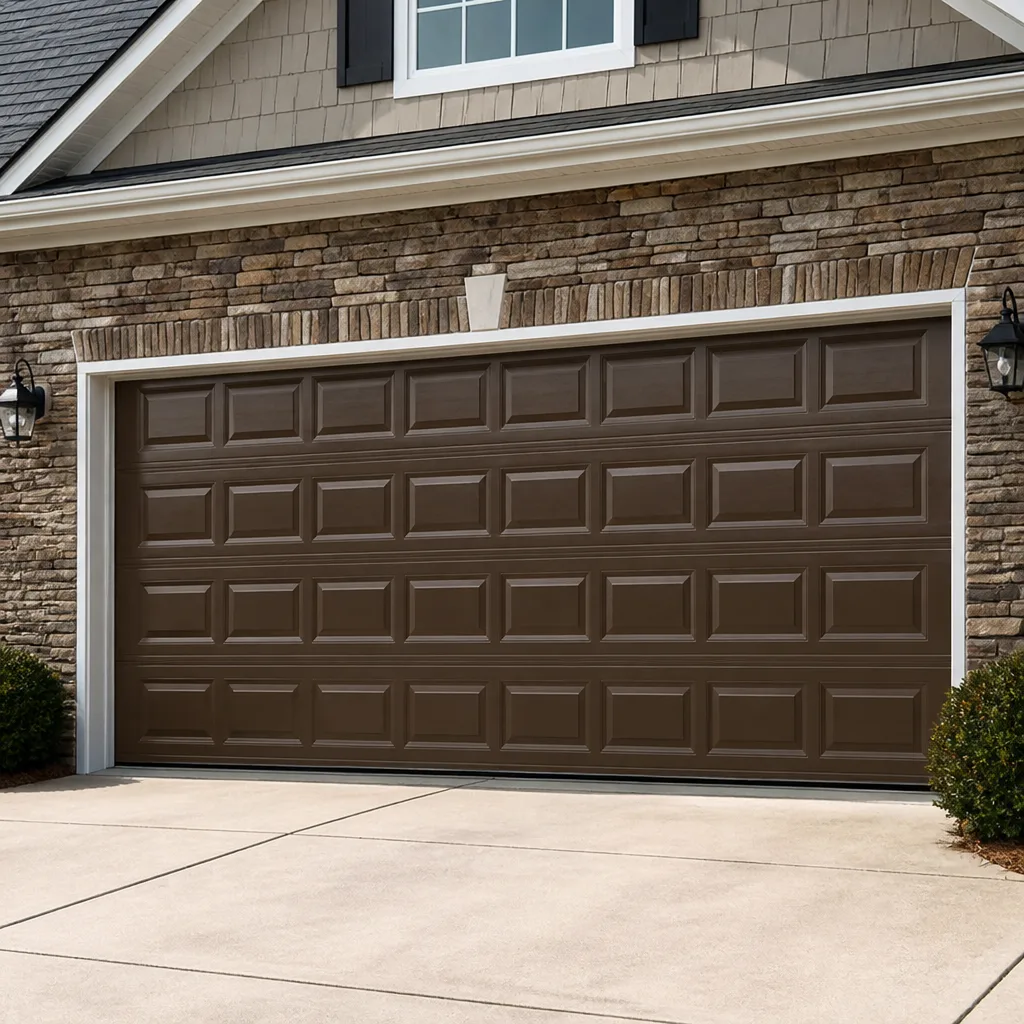 Raised-panel steel
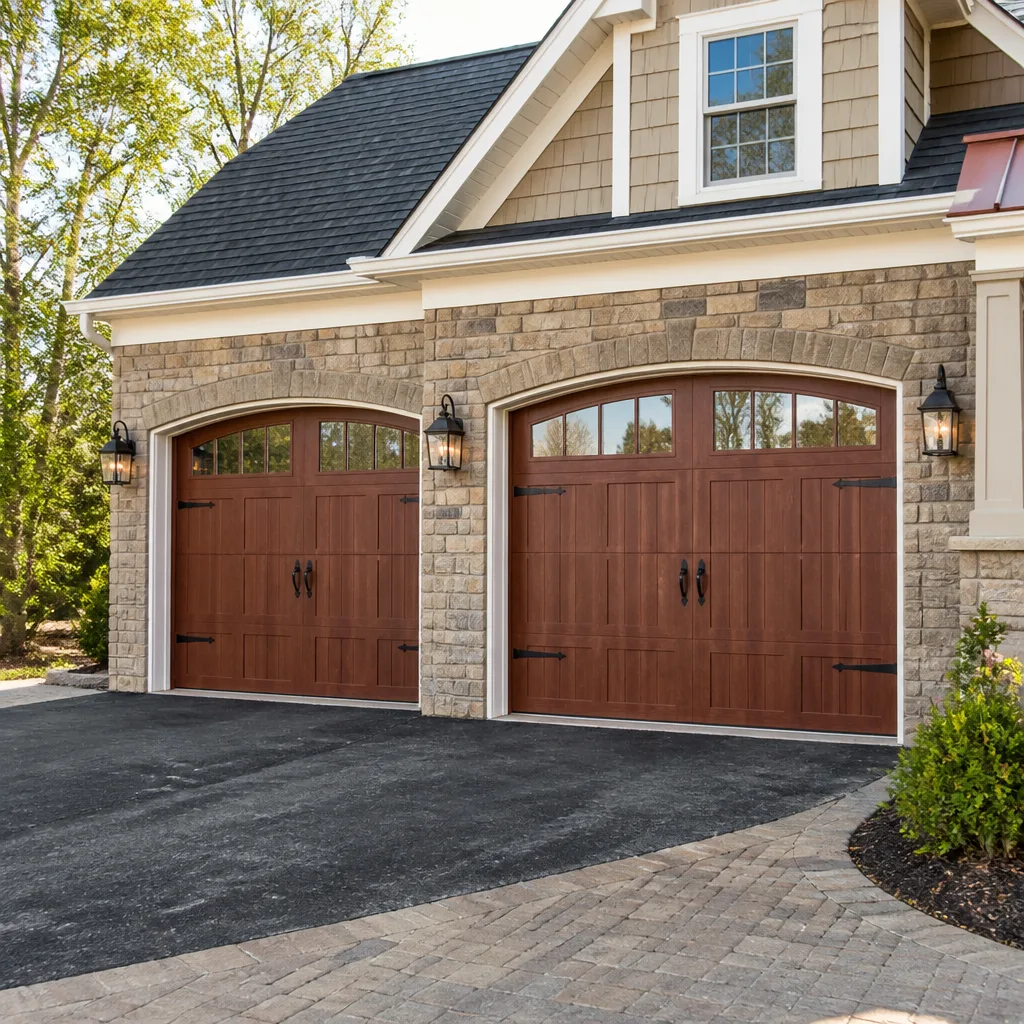 Carriage house
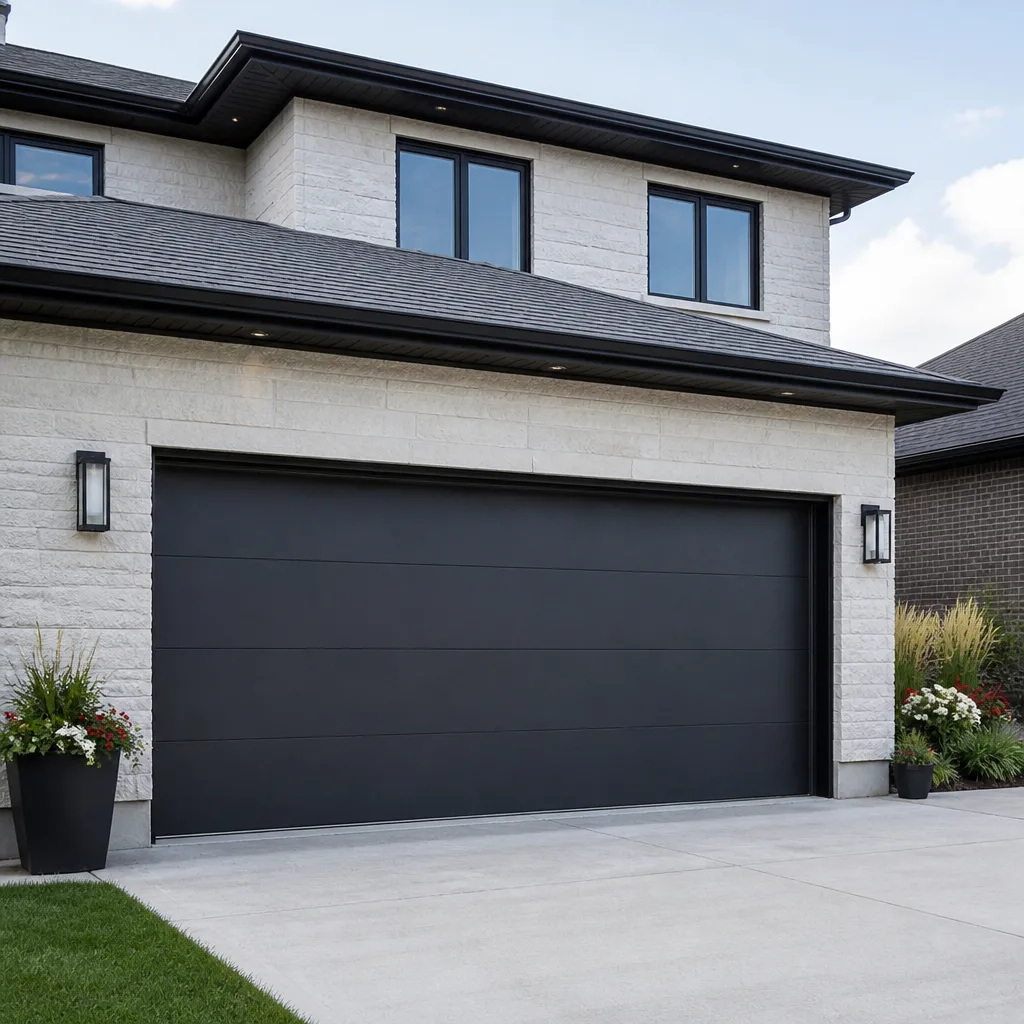 Modern flush
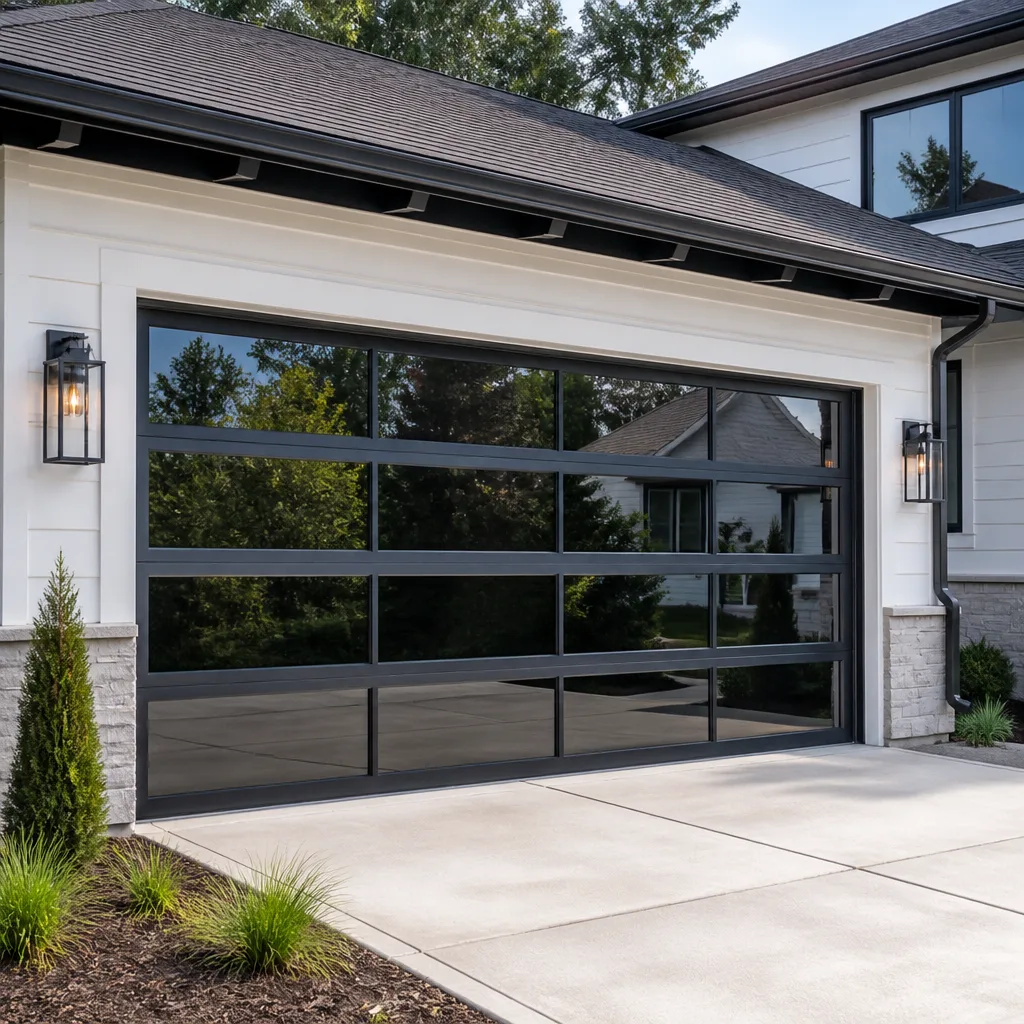 Full-view glass
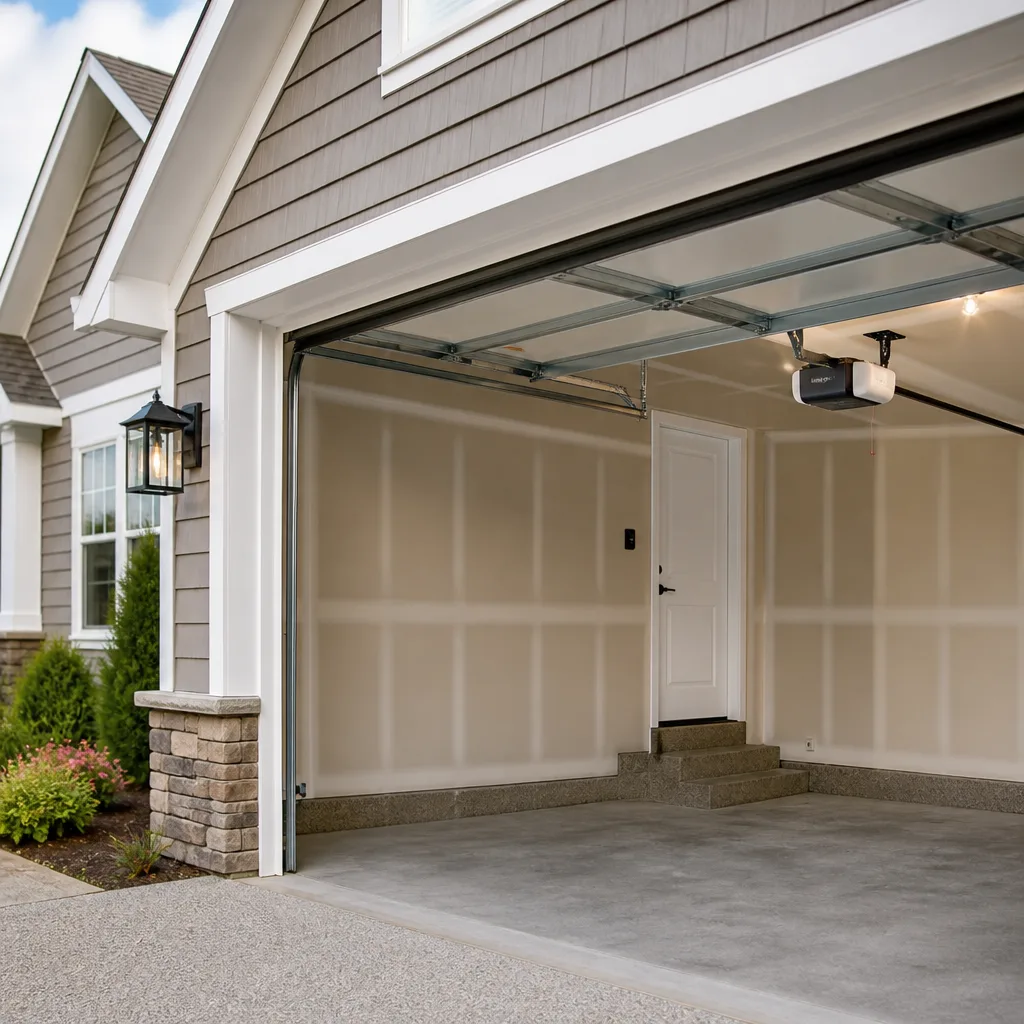 LiftMaster openers
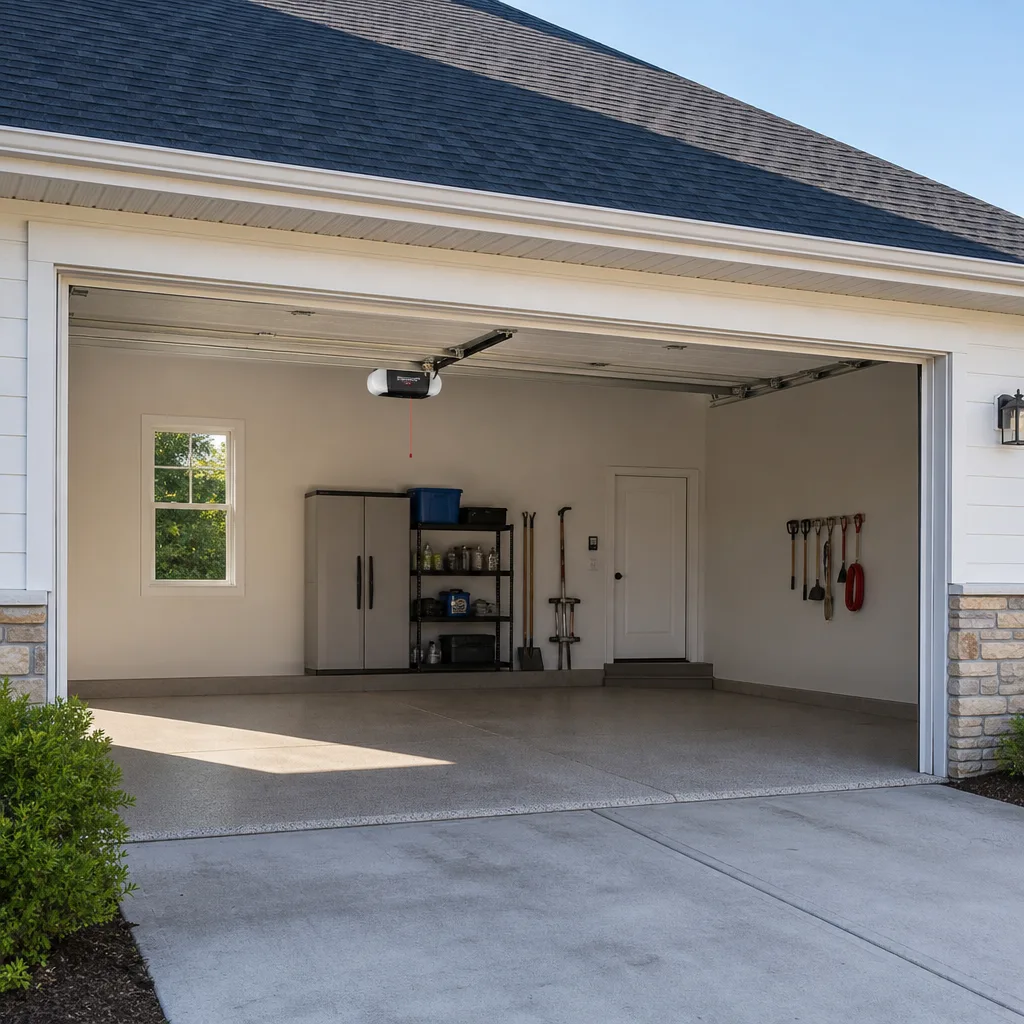 Chamberlain openers
Full 25-point door and opener safety check with every visit - springs, cables, rollers, tracks, and your LiftMaster or Chamberlain opener included
You get a price before we start. It does not change when the truck arrives.
Get your free estimateGarage Door Emergency Preparedness Guide for Jacksonville Homes
During Hurricane Irma, one of the most common post-storm service calls across Jacksonville wasn’t broken doors. It was homeowners who couldn’t get their car out of the garage because the power was out and they’d never used the manual release cord. That’s a fixable problem that takes about 90 seconds to learn before the storm. This guide covers everything Jacksonville homeowners should know about garage door emergencies: how to release the door manually when the power fails, how to secure a garage door before a hurricane, what a battery backup actually does, and what to do in the first 30 minutes after storm damage. For common problems and how to fix them, see our troubleshooting guide. We’ve seen what happens when these systems fail during Florida’s storm season, and nearly all of it is preventable with the right knowledge and a little preparation.
Quick Answer
Garage door emergency preparedness for Jacksonville homes means three things: knowing how to operate your door manually when the power goes out, having a pre-storm plan to secure the door against hurricane-force winds, and understanding what to do immediately after damage occurs. The most important 90 seconds you can spend today is learning where your manual release cord is and how it works. Everything else builds from there.
Styles & brands we work with
Table of Contents
- The Manual Release Cord: What It Is and How to Use It Safely
- Battery Backup Openers: What They Actually Cover
- Pre-Hurricane Garage Door Checklist for Jacksonville Homes
- How to Manually Secure a Non-Wind-Rated Garage Door
- The First 30 Minutes After Storm Damage: What’s Safe to Touch
- Documenting Garage Door Damage for a Florida Insurance Claim
- Common Mistakes to Avoid
- When to Call a Professional
The Manual Release Cord: What It Is and How to Use It Safely
The manual release cord is the red T-handle hanging from a rope or cord near the center of your garage door opener rail. It disconnects the door from the opener carriage so you can lift and lower the door by hand. Every Jacksonville homeowner should know where this cord is and how it behaves before hurricane season starts, because when the power goes out, finding it in a dark garage with a flashlight in your mouth is not the time to learn.
Here’s how to operate it correctly:
- Make sure the door is fully closed before pulling the release cord. Pulling it while the door is open or partially open under spring tension can cause the door to slam down hard enough to damage the door, the track, or anyone standing underneath it.
- Pull the cord down and toward the garage interior. You’ll hear or feel the carriage disengage from the opener chain or belt.
- Test the door by lifting it slightly. It should raise smoothly with moderate effort. If it feels unusually heavy or jerks, stop and leave it closed. That’s a sign of a spring problem, and you’ll want a technician to address it before operating the door manually.
- To re-engage the opener when power returns, pull the cord again or press the wall button. The carriage will re-lock onto the opener the next time it cycles.
One warning we emphasize to every customer we work with in Jacksonville: if the door is in the raised position when the power fails, do not pull the release cord. A door sitting open already has all the spring tension loaded. Disconnecting it from the opener in that state removes the only thing holding it up. The door will drop. In our experience, this is the single most common cause of self-inflicted garage door damage during power outages. If the door is open when you lose power, lower it manually first using the opener’s emergency lowering function (if equipped) or by carefully guiding it down with help, then proceed with the release.
If you’re unsure whether your springs are in good condition, one of our technicians can evaluate them during a routine service visit. Knowing the state of your springs before a storm removes the guesswork from every manual operation you might need to perform. You can learn more about the types of repairs we handle on our Garage Door Repair in Jacksonville page.
Battery Backup Openers: What They Actually Cover
Jacksonville’s outage frequency during hurricane season makes battery backup openers one of the most practical upgrades a homeowner can make. A battery backup unit, typically a small box wired into the opener’s power supply, keeps the opener functioning for a limited number of cycles when utility power fails. What most people don’t realize is that the backup capacity is finite. A standard battery backup on a LiftMaster or Chamberlain opener provides roughly 20 to 30 cycles over a 24-hour period, depending on the model and the age of the battery. Genie systems vary slightly but operate within a similar range. That’s not unlimited access. It’s enough to get your car out, secure the door, and get back inside.
Here’s what a battery backup actually covers and what it doesn’t:
- It covers opener cycles. The motor, limit switches, and safety sensors all remain powered so the door opens and closes normally during an outage.
- It covers the wall control and remotes. You can still operate the door from inside the garage or from your car without getting out in the rain.
- It does not cover the springs. If a spring breaks during an outage, the opener motor, even with battery power, will struggle or refuse to lift a door with a broken spring. Never force it.
- It does not cover the door itself. Wind damage, impact damage, or a door knocked off its track still requires physical repair.
For Jacksonville homeowners, a battery backup matters most if the garage is your primary entry point. Many of our customers in neighborhoods like Riverside, San Marco, and Mandarin come and go almost exclusively through the garage. When that’s your daily habit, losing the opener feels less like an inconvenience and more like being locked out of your own house. A battery backup turns a 30-second manual operation into a normal button push, which sounds minor until you’re doing it in a downpour at 6 a.m.
If you need a battery backup installed or your existing one tested, our Garage Door Opener Repair in Jacksonville service covers both legacy systems and modern smart/Wi-Fi-enabled openers from LiftMaster, Chamberlain, Genie, and Craftsman.
Pre-Hurricane Garage Door Checklist for Jacksonville Homes
Hurricane season in Jacksonville runs from June through November, and the prep window is usually 48 to 72 hours before landfall. That’s enough time to handle each of these items without rushing, but only if you know what they are ahead of time. Here’s the garage door repair maintenance checklist for Jacksonville homeowners we recommend to every customer we serve in the area.
- Test the manual release cord. Disengage the opener and lift the door a few inches manually. It should move smoothly. Re-engage and confirm the opener functions normally afterward.
- Check the spring condition. Look for gaps in torsion springs, visible rust, or uneven door movement. A spring that’s already compromised will likely fail during or immediately after a storm when the door gets operated most frequently.
- Tighten all visible hardware. Hinges, brackets, and track bolts loosen over time. Storms add vibration and pressure. A 10-minute check with a socket set prevents most mid-storm failures.
- Lubricate moving parts. Use a silicone-based spray on rollers, hinges, and springs. Avoid heavy grease, especially on the track, which attracts dirt and sand from Jacksonville’s coastal air.
- Test the battery backup (if equipped). Unplug the opener from the wall and operate the door once. If the battery is more than two years old, consider replacing it before the storm. Opener batteries in Florida’s heat degrade faster than the manufacturer’s stated lifespan.
- Clear the track path. Remove bikes, bins, and anything stored near the door that could fall into the track or block the door during high winds.
- Park a car in front of the door (optional). For attached garages with non-wind-rated doors, parking the nose of a vehicle against the inside of the door adds a small amount of bracing against inward flex.
If any step reveals a problem, don’t wait until the storm is 12 hours out to fix it. The week before hurricane season starts is the ideal time to schedule a service call. We’d also recommend that anyone with a garage door older than 10 years get a full inspection once a year, even outside storm season. The salt air and humidity in Jacksonville are hard on metal components, particularly springs and cables.
How to Manually Secure a Non-Wind-Rated Garage Door
Most garage doors in Jacksonville homes were not installed with hurricane wind-load requirements in mind. Building codes have changed over the years, but hundreds of thousands of existing homes in Duval County, St. Johns County, and Clay County still have standard doors that flex significantly under high wind pressure. A non-wind-rated door will bow inward during sustained winds, and if it fails, the porch-style pressure differential can lift the roof and cause catastrophic structural damage. Securing the door is not about keeping water out. It’s about keeping the roof on.
If your door is not wind-rated, here’s what you can do before a storm:
- Verify the door is fully closed and latched. This sounds obvious, but a door that’s even two inches off the ground allows wind to get underneath it and pressurize the garage. Confirm the door is sitting flush on the slab.
- Disconnect the opener and operate the door manually. This ensures the opener carriage won’t be damaged by any flexing of the door during the storm.
- Install vertical bracing if you have it. Some Jacksonville homeowners keep 2×4 or aluminum bracing kits that attach to the inside of the door and anchor to the floor. If you own these, install them according to the manufacturer’s pattern before winds reach tropical storm force.
- Reinforce the bottom seal. A wind-rated bottom seal or a heavy sandbag line along the inside of the door reduces the amount of air that can get underneath during gusts.
- Remove loose items from the garage interior. Anything light enough to become a projectile when the door flexes should be secured or moved.
What do you actually protect by bracing a garage door? Three things. First, the door itself, which you won’t have to replace after the storm if it stays on its track. Second, everything stored in the garage, which will be exposed to wind-driven rain and debris if the door fails. Third, and most importantly, the structural integrity of the garage roof. A garage door blowing in during a hurricane is a primary cause of roof failure in single-family homes along Florida’s coast. It’s not alarmism. It’s basic structural engineering, and it’s the reason the building code has pushed wind-rated doors into new construction across the Jacksonville metro.
If you’re considering an upgrade to a wind-rated door, we install Clopay, Amarr, and Wayne Dalton doors, including models engineered for Florida’s wind zone requirements. Our Garage Door Installation in Jacksonville team can walk you through options that fit your budget and your home’s existing track setup.
The First 30 Minutes After Storm Damage: What’s Safe to Touch
When a garage door takes damage during a storm, the first 30 minutes matter for two reasons: safety and insurance documentation. Here’s what’s safe to touch and what should be left untouched until a technician arrives.
Safe to touch and do immediately:
- Take photos and video of the door, track, opener, and any visible damage from inside and outside the garage. Do this before moving anything.
- If the door is partially off its track but still hanging, close the interior door between the garage and the house to keep debris and rain out of your living space.
- Unplug the garage door opener from the wall outlet if the door is damaged. A damaged door can draw an opener off its limit settings and cause the motor to run hot.
- Move cars away from the door area if safe to do so, but avoid driving over debris.
- Place a tarp or plywood over the damaged door opening from the outside only if it’s safe to work around the door without touching it directly.
Do not touch or attempt to fix:
- Any door still connected to tensioned springs. A bent track can suddenly release spring tension without warning. This is one of the most dangerous situations in home repair, and it’s the reason garage door springs and cables are not a DIY job. High-tension springs under load can cause serious injury if they snap or release unexpectedly.
- A door that’s hanging at an angle. The entire assembly is under uneven load, and any movement can shift it unpredictably.
- Any visible break in a torsion spring or extension spring. Leave the entire door alone and keep everyone away from it.
- Electrical wiring exposed by water or impact. If the opener was submerged or the outlet is wet, do not touch anything until the circuit is confirmed dead.
The rule we teach our customers: if the door is not on its track or a spring is visibly broken, the safest thing you can do is back away, close the interior door, and call a professional. The $150 to $350 you spend on a spring replacement is a fraction of what an emergency room visit costs. Garage door springs kill people when they’re mishandled. This isn’t a warning we water down.
Documenting Garage Door Damage for a Florida Insurance Claim
Florida homeowners insurance claims for garage door damage are common after hurricanes, but documentation gaps get more claims underpaid or denied than any other single factor. The time to start documenting your garage door is before the storm, not after. Here’s a step-by-step process we recommend to every homeowner in Jacksonville.
- Document the pre-storm condition. Take date-stamped photos of the entire garage door system: the door panels, track, springs, cables, opener unit, and safety sensors. Do this at the start of hurricane season each year. These photos are your baseline if you ever need to prove that damage was storm-caused rather than pre-existing.
- Take post-storm photos immediately. Capture wide shots showing the whole door in context, then close-ups of every damaged component. Use a ruler or coin for scale on dents, cracks, and bent hardware.
- Photograph the surrounding property. Include shots of debris, tree damage, missing shingles, or any other storm evidence on the property. This helps an adjuster connect the garage door damage to the storm event rather than wear and tear.
- Save your pre-storm inspection records. If a professional inspection was completed before the storm, attach that record to your claim. It establishes the door was in working order before the event.
- Get a written estimate before filing. A written repair estimate from a licensed garage door company gives your adjuster something concrete to compare against their own assessment. Estimates are free, and they prevent adjusters from lowballing the repair scope.
- Do not dispose of damaged parts. Insurance adjusters may want to inspect the damaged door, track, or opener components before approving replacement. Leave everything in place until the adjuster has visited.
A note specific to Jacksonville and Florida homeowners: many policies have a separate hurricane deductible, often 2% to 5% of your dwelling coverage. That means a $3,000 garage door claim might come with a $6,000 deductible on a $300,000 policy. It’s worth checking your policy language before you file, because a small repair that’s under your hurricane deductible may be cheaper to pay out of pocket than to file and risk a premium increase. We’ve walked through this math with customers from Arlington to Julington Creek, and the right answer varies by policy.
Common Mistakes to Avoid
- Waiting until the storm is already in the Gulf to test the door. If a spring or cable is about to fail, you’ll discover it at the worst possible moment. Test the door at the start of hurricane season, not when the storm is 36 hours out and every service provider is booked solid.
- Pulling the release cord while the door is open. This causes the door to drop and is the most common avoidable injury we hear about. Always close the door first, then release.
- Assuming a battery backup means unlimited operation. Most backups provide 20 to 30 cycles. If you’ve cycled the door 15 times during an outage, you’re close to the limit. Conserve cycles.
- Ignoring a loud or rough-running opener for months before storm season. An opener that grinds or struggles now will likely fail under the added load of storm conditions. Fix the small issue before it becomes an emergency.
- Leaving the garage door partially open to ventilate the garage. During a storm, an open gap is an invitation for wind pressure to get inside. Keep the door closed and seated on the slab.
- Attempting to re-seat a door that jumped its track. The springs are still under tension, and the door is under uneven load. This is the exact scenario where homeowners get hurt. Back away and call a pro.
- Filing an insurance claim without pre-storm photos. Without baseline documentation, adjusters can attribute damage to normal wear. You lose the argument before it starts.
When to Call a Professional
Some garage door issues are safe to handle on your own, like testing a manual release or tightening loose bolts. But these situations call for a trained technician, no exceptions: a broken or visibly stretched spring, a door off its track, a snapped cable, bent track sections, a burned-out opener motor, or any electrical issue where wiring is exposed or wet. High-tension springs and cables carry enough stored energy to cause serious injury, and that’s not a risk worth taking to save a service call.
Main Street Garage Door Repair offers free estimates in Jacksonville. Call (833) 467-4139 and we’ll send a technician who works on your specific brand, whether it’s LiftMaster, Chamberlain, Genie, Clopay, Amarr, Wayne Dalton, Craftsman, or Raynor. We’ll tell you whether repair or replacement actually makes sense for your door and your budget.
See the difference
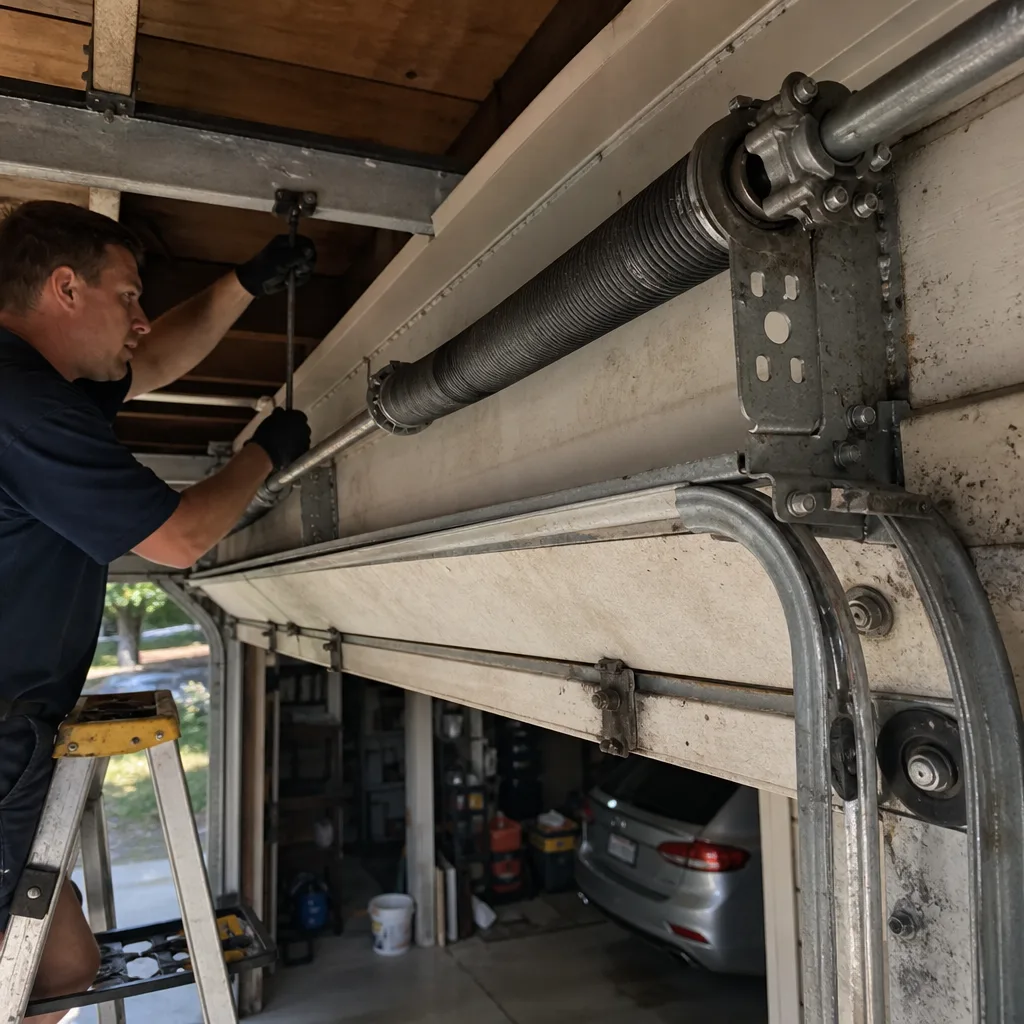 Before
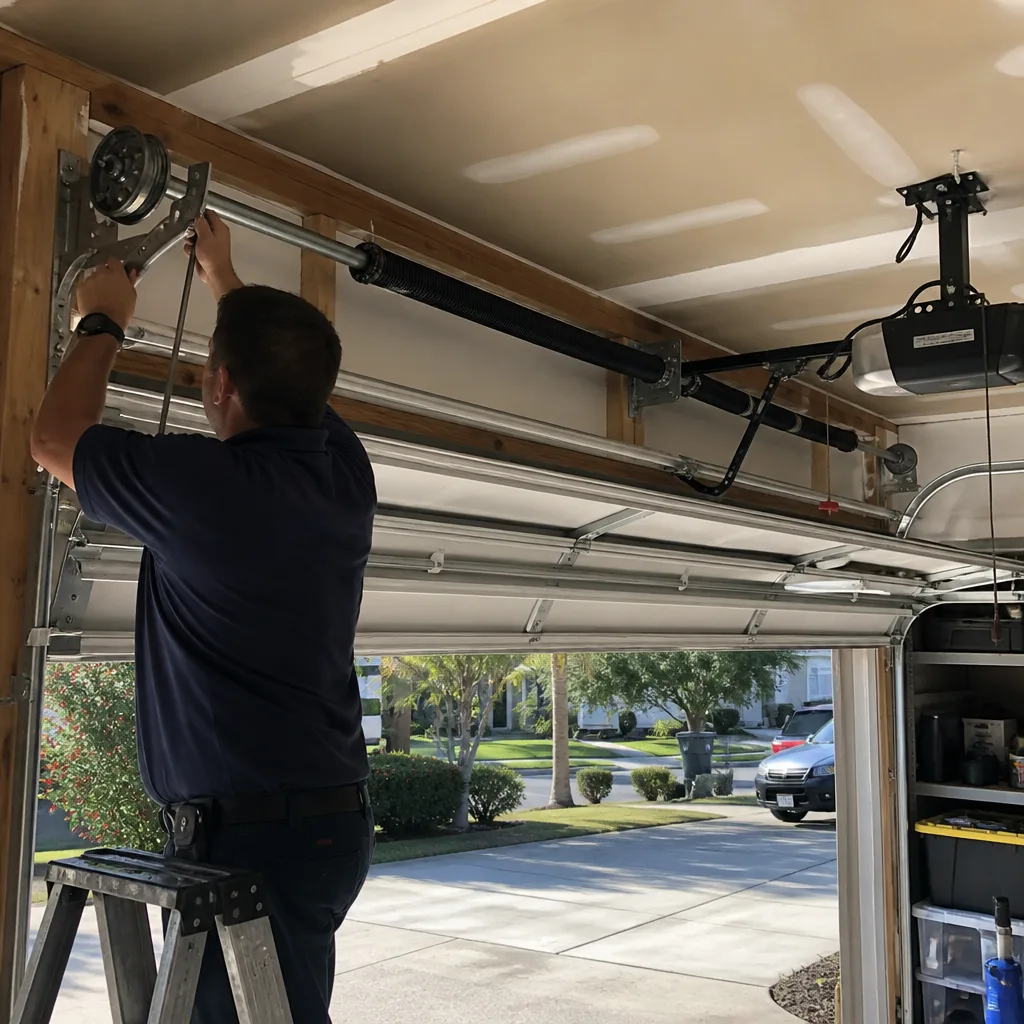 After
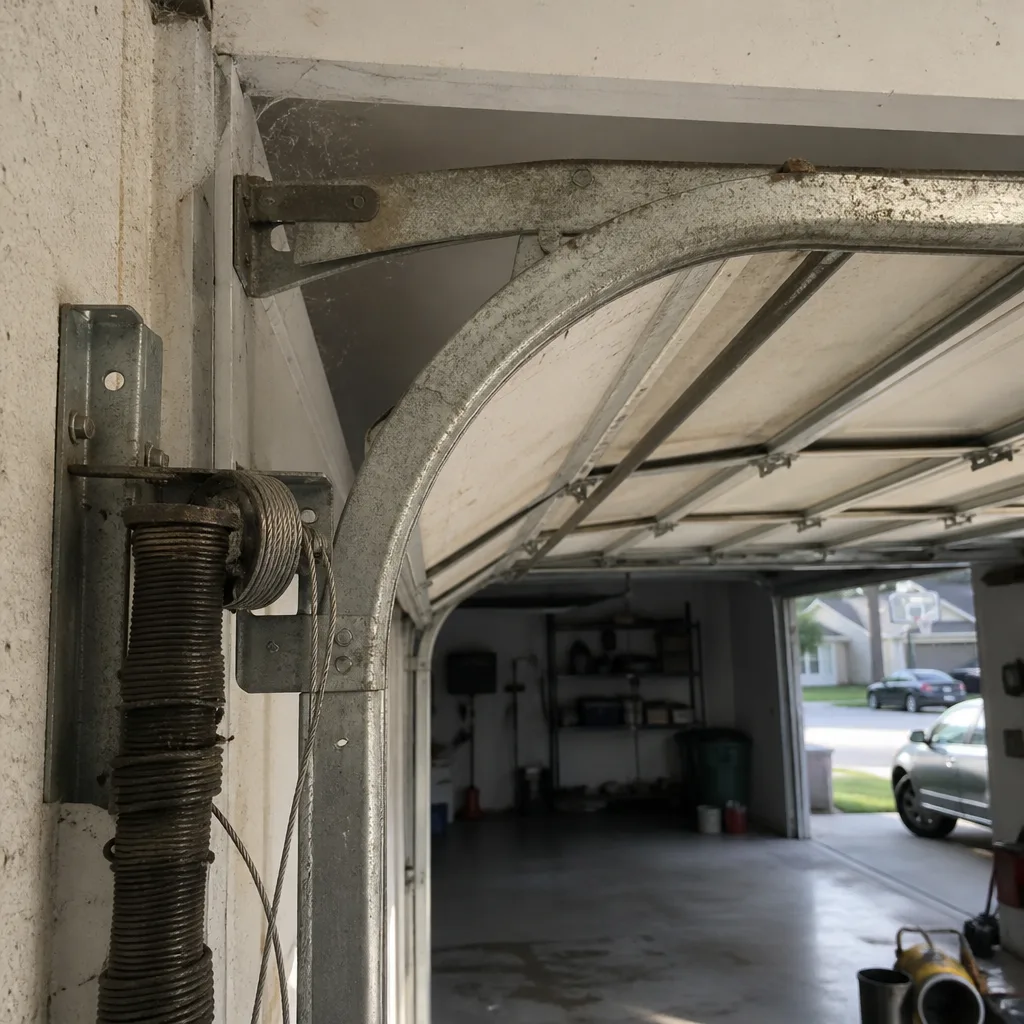 Before
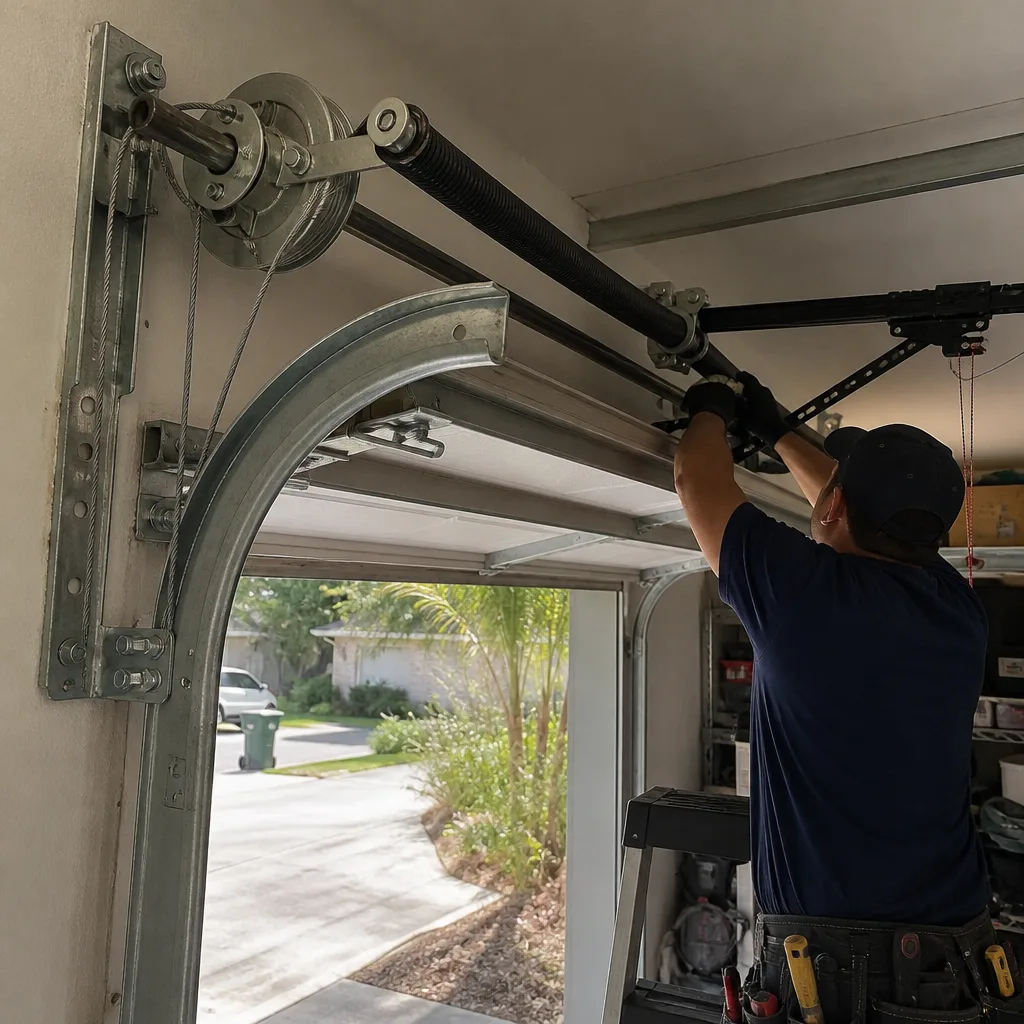 After
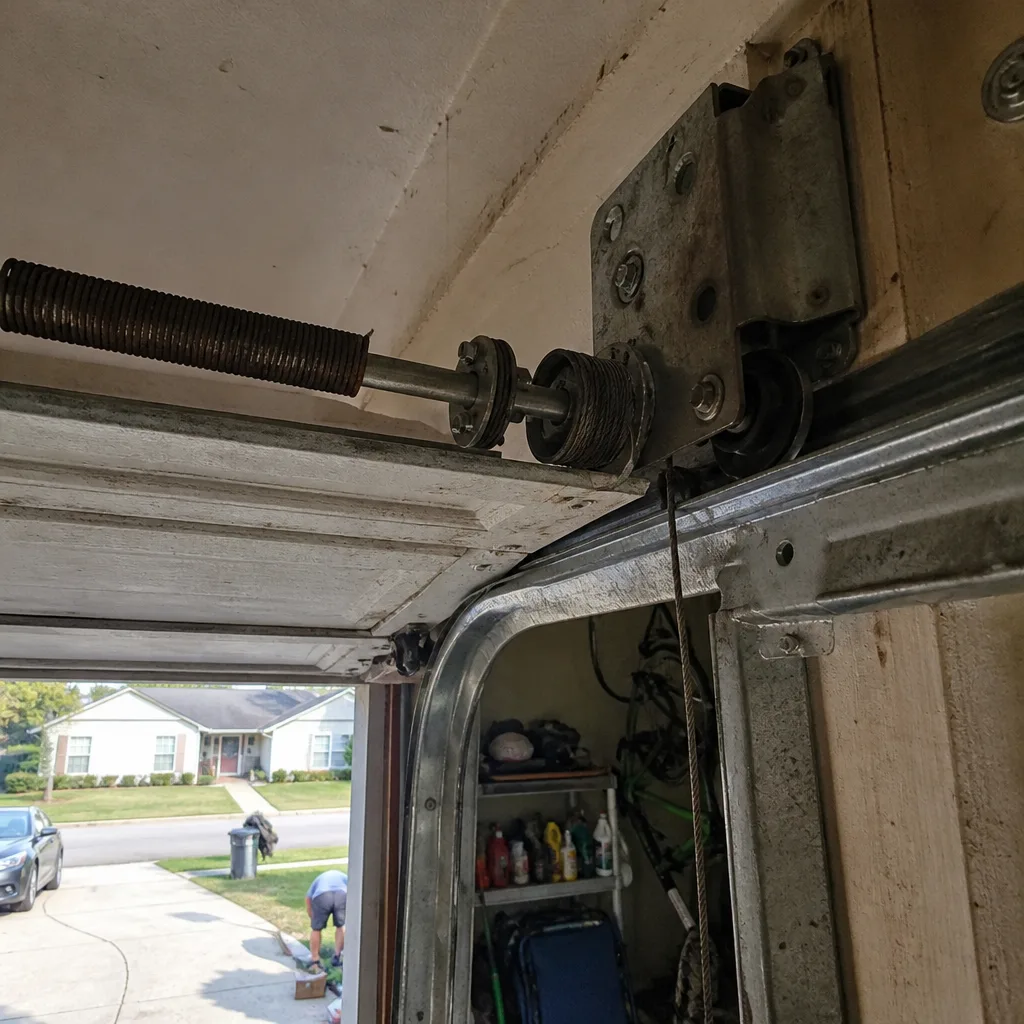 Before
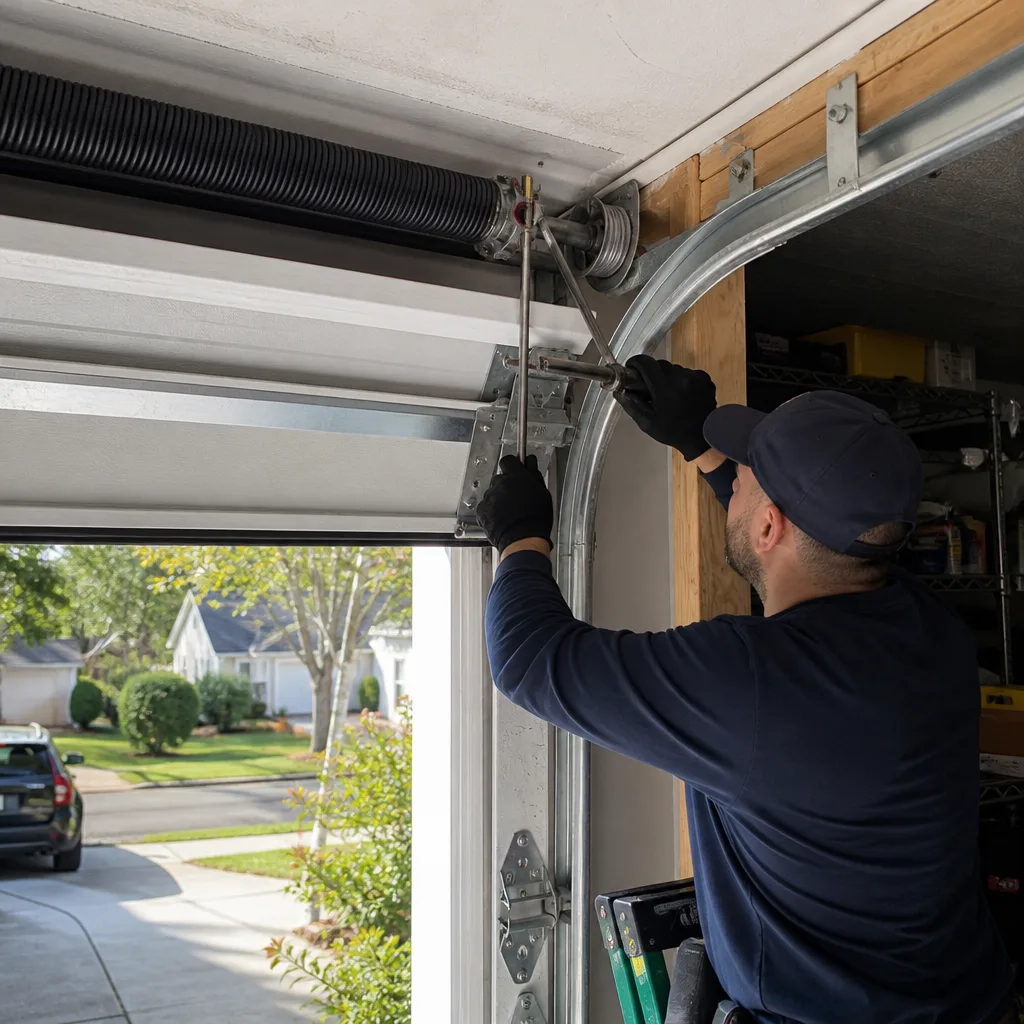 After
Frequently Asked Questions
Garage door spring replacement in Jacksonville typically runs from $150 to $350 for a single spring and $250 to $500 for a pair, depending on the door weight, spring type, and whether it’s torsion or extension. The price is quoted and agreed before any work starts. Call (833) 467-4139 for an exact quote; estimates are free.
Yes, if the door is closed and the springs are in good condition, you can pull the manual release cord and lift the door by hand. If the door is open when the power fails, do not pull the release; the door will slam. If the springs are weak or broken, leave the door alone and call a technician.
A battery backup makes sense for most Jacksonville homeowners, especially if the garage is your primary entry point. It provides roughly 20 to 30 opener cycles during an outage, which covers normal daily use for 24 to 48 hours. It does not extend to the springs or the door structure itself, so a broken spring still requires a service call.
Document everything with photos first, unplug the opener, keep everyone away from the door, and call a professional. Do not attempt to move, re-seat, or repair a door that’s off its track or has a broken spring. The springs are under tension and can release catastrophically.
Most Florida homeowners policies do cover windstorm damage to garage doors, but coverage is subject to your hurricane deductible, which is typically 2% to 5% of your dwelling coverage. That deductible may exceed the cost of a minor repair, so run the math before filing. Pre-storm photos and professional inspection records strengthen any claim.
Once a year is right for most Jacksonville homes. The humidity and salt air in the coastal areas accelerate rust on springs, cables, and hardware. An annual inspection catches spring fatigue and track issues before they become failures, and it’s much cheaper than an emergency repair during hurricane season.
The Bottom Line
Garage door emergency preparedness for Jacksonville homes comes down to a few hours of effort once a year. Learn your manual release cord before you need it. Test your springs and hardware at the start of hurricane season. Know what a battery backup covers and what it doesn’t. If your door isn’t wind-rated, have a bracing plan. And if damage does occur, document before touching and leave anything under spring tension to a pro. A garage door is the heaviest moving part of your house, and in hurricane country, it’s also the most vulnerable opening in your home’s envelope. For more guides & resources, visit our blog. Treat it accordingly.
For a free estimate on any garage door repair, opener repair, or replacement in Jacksonville, call (833) 467-4139. We work on your brand, we tell you whether repair or replacement actually makes sense, and the price is always agreed before any work begins. You can also learn more about our full range of services on our Main Street Garage Door Repair home page.
Written by the team at Main Street Garage Door Repair, serving Jacksonville since 2018.