

Last updated October 31, 2026
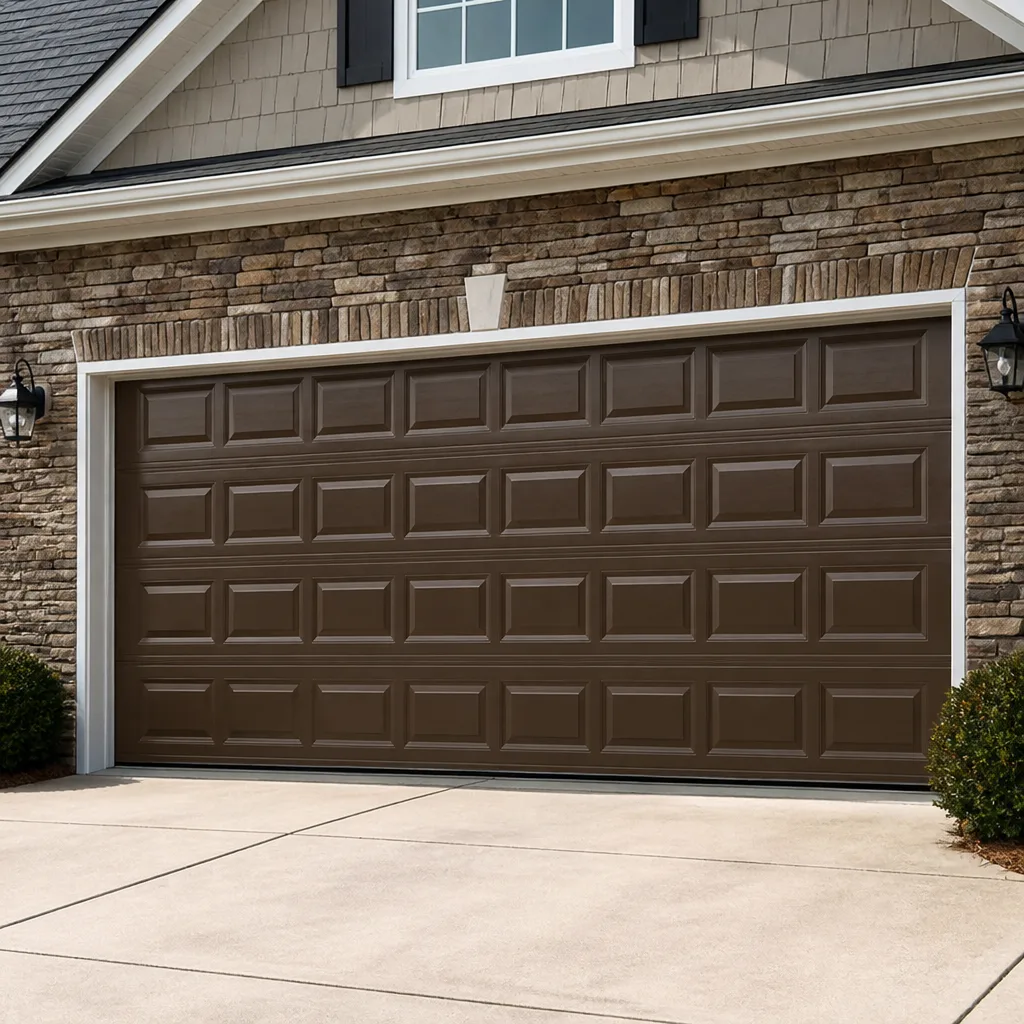 Raised-panel steel
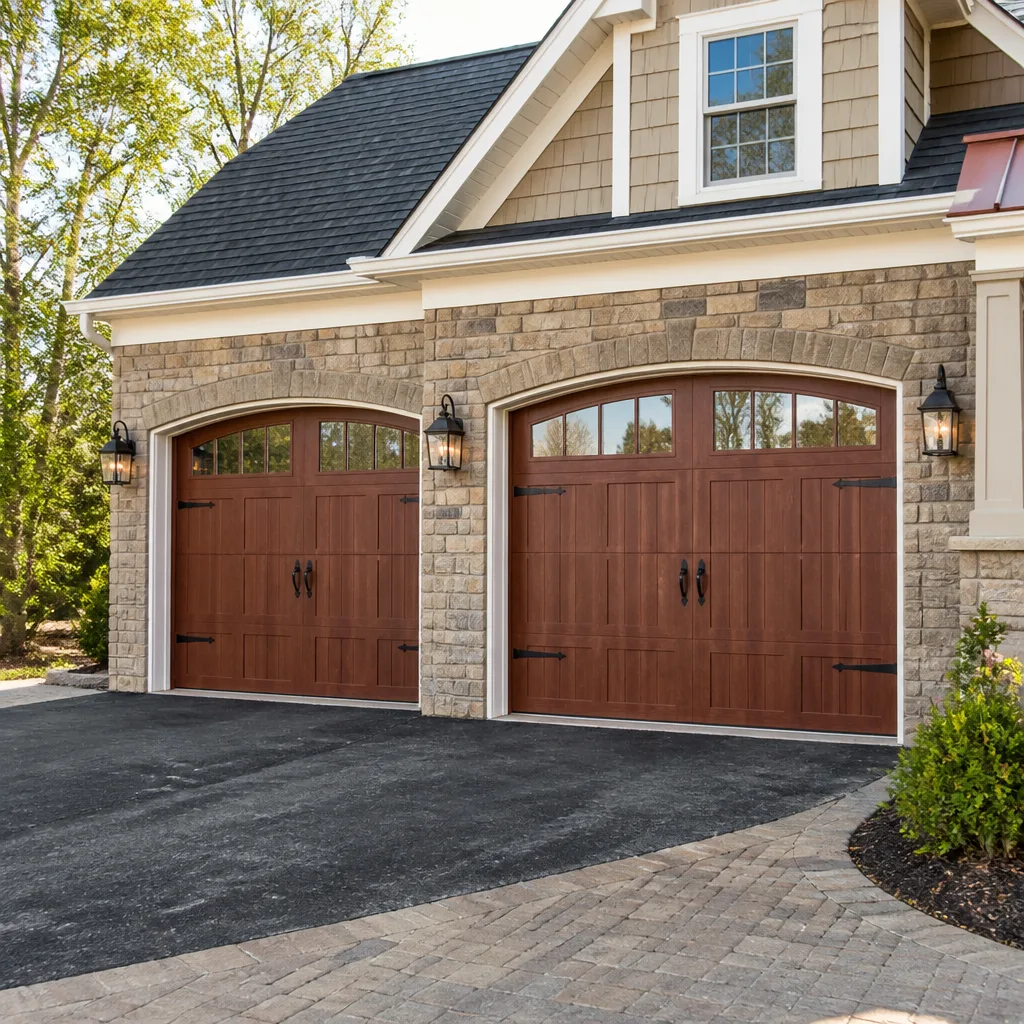 Carriage house
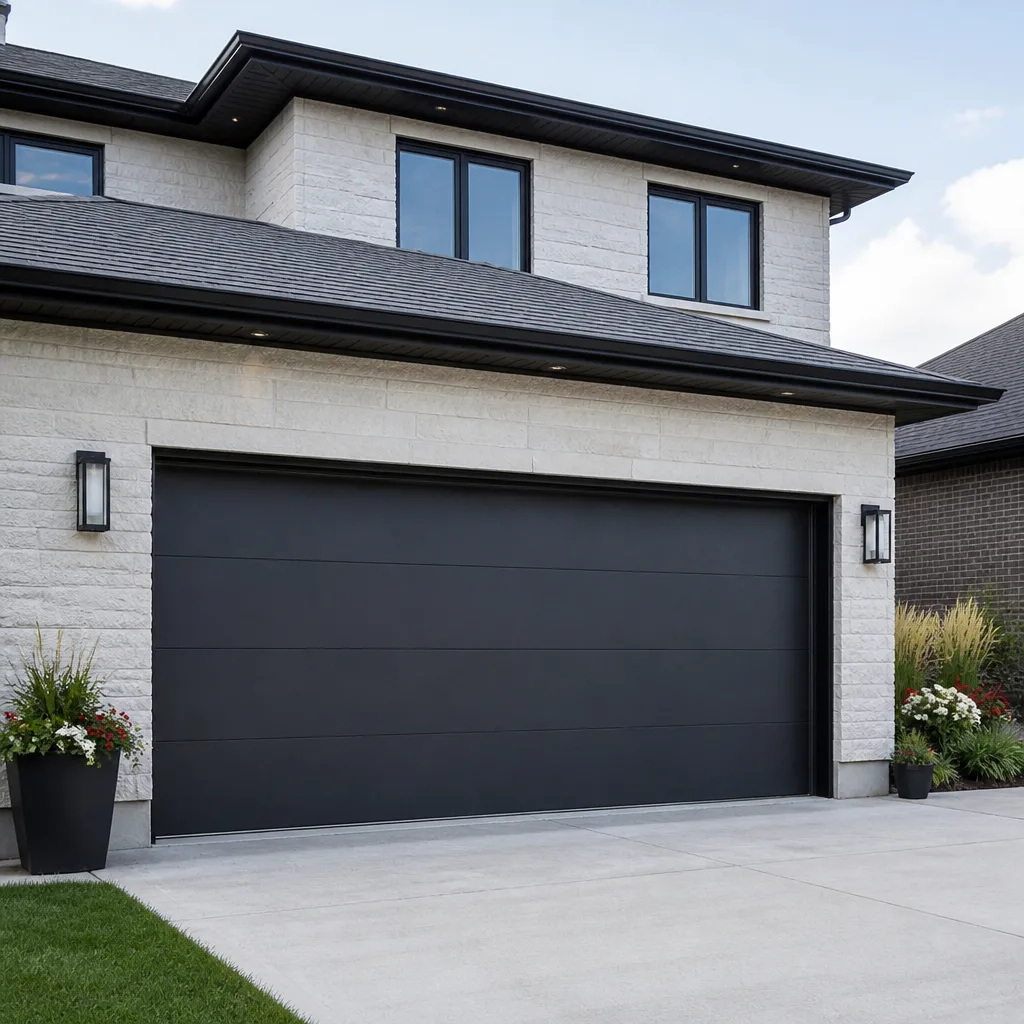 Modern flush
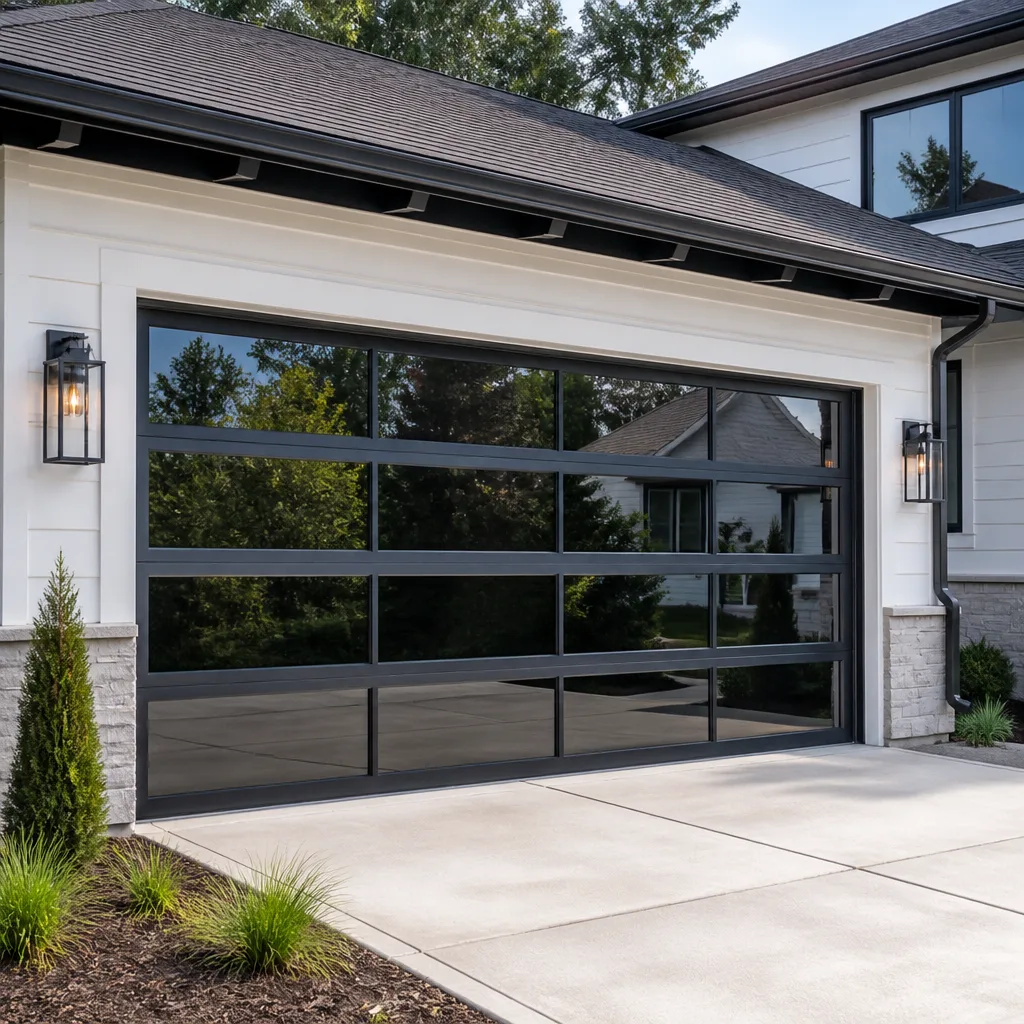 Full-view glass
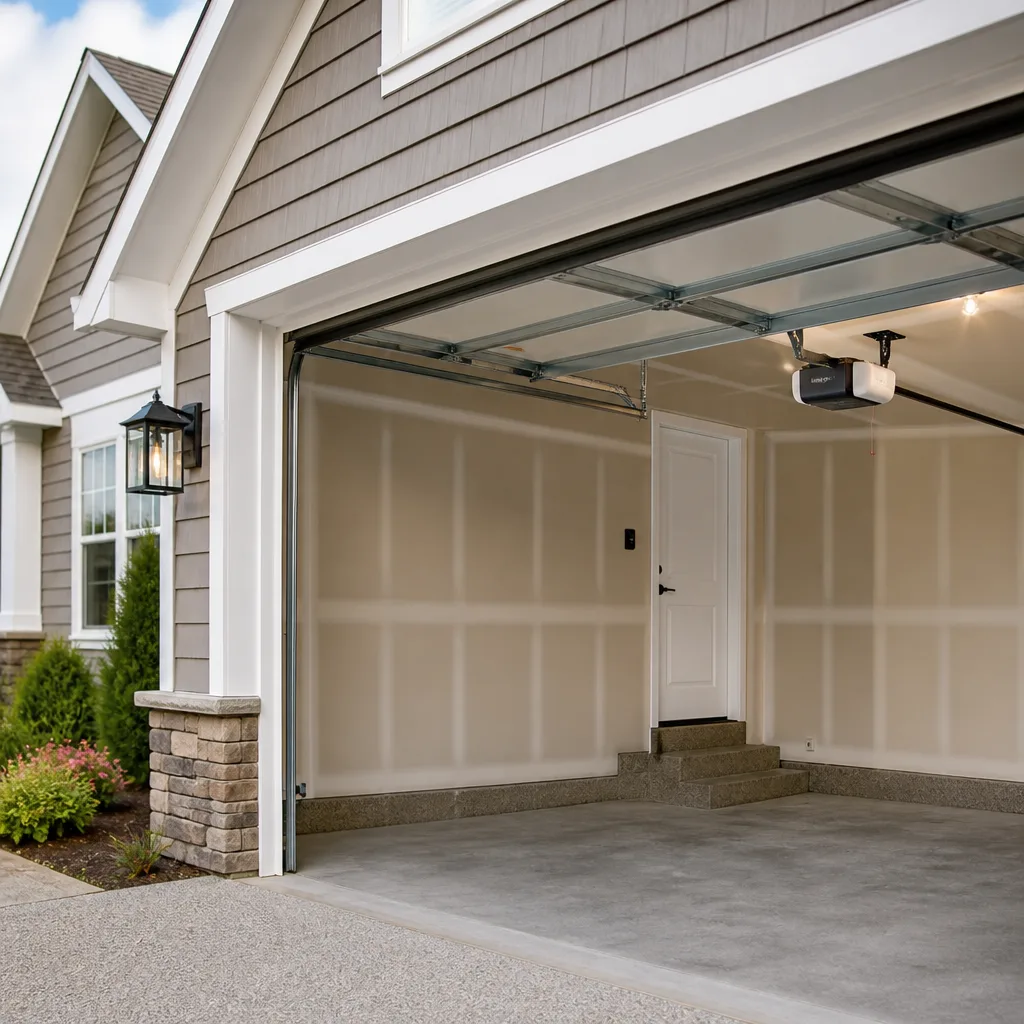 LiftMaster openers
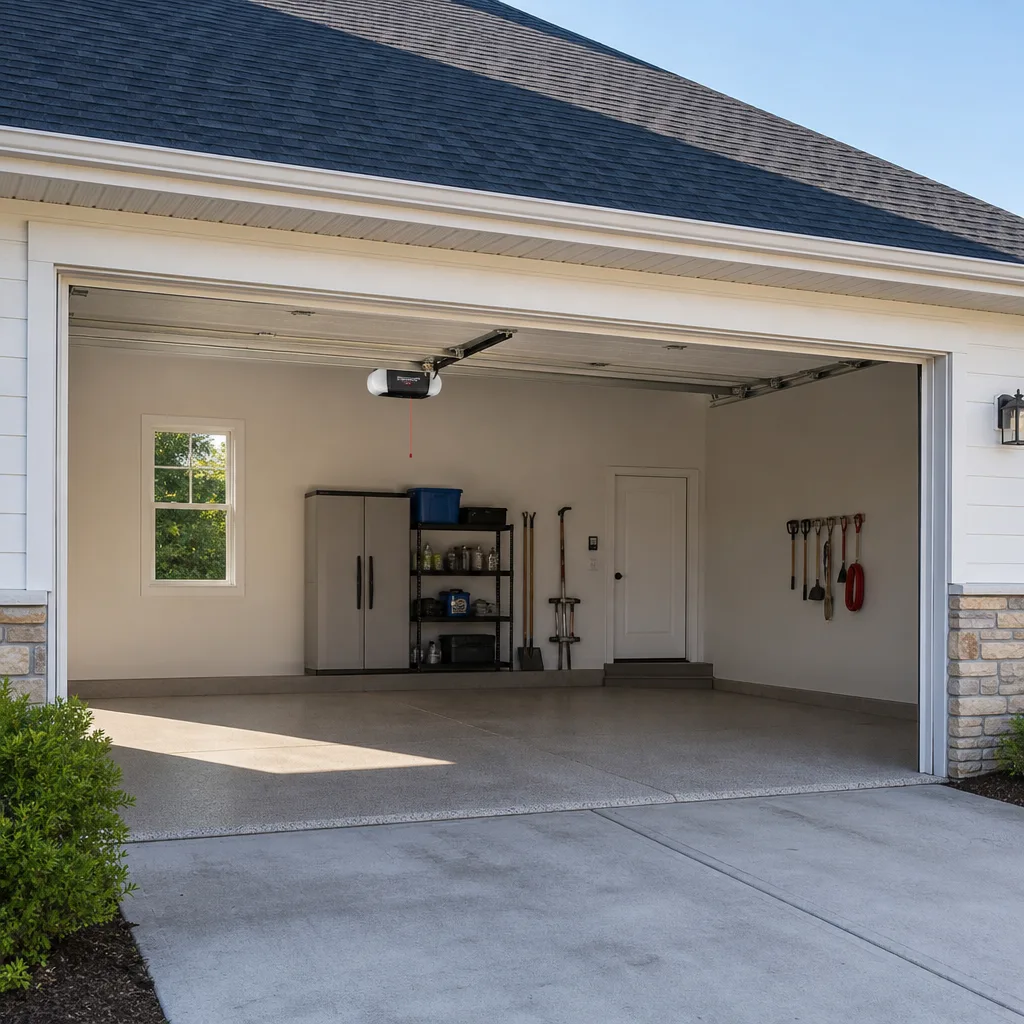 Chamberlain openers
Full 25-point door and opener safety check with every visit - springs, cables, rollers, tracks, and your LiftMaster or Chamberlain opener included
You get a price before we start. It does not change when the truck arrives.
Get your free estimateThe Complete Guide to Garage Door in Jacksonville
Jacksonville averages over 53 inches of rain a year and sits squarely in a hurricane-prone zone, yet most garage door guides read like they were written for Phoenix or Cleveland. Salt air eats at hardware. Humidity swells wood cores. Afternoon thunderstorms knock out power right when you need the door to close. If you own a home here, your garage door lives in one of the harsher environments in the country. This guide explains what that means for the springs, tracks, openers, and door materials on your house, how Jacksonville’s building code shapes your options, and when a repair makes more sense than a replacement. We wrote it from the perspective of people who work on garage doors in Jacksonville every day, not from a generic template.
Quick Answer
The complete guide to garage doors in Jacksonville comes down to this: choose corrosion-resistant hardware and wind-rated doors, expect roughly 7 to 10 years from springs and 10 to 15 from a steel door near the coast, and treat your opener’s battery backup as essential equipment, not an upgrade. Your three recurring obligations are lubrication, balance testing, and rust inspection on hardware that salty air attacks faster here than in inland Florida. When something fails, the repair-versus-replace decision should hinge on door age, panel condition, and whether the tracks still align on a slab that shifts with sandy soil.
Styles & brands we work with
Table of Contents
- Why Jacksonville’s Climate Is Harder on Garage Doors Than Most of Florida
- Florida Building Code and Wind Ratings: What Jacksonville Homeowners Must Know
- Door Materials in a Coastal Environment: Steel, Aluminum, Wood, and Fiberglass
- Springs, Cables, and the Salt Air Problem
- Opener Considerations: Battery Backup, Wi-Fi, and Jacksonville’s Power Outages
- Sandy Soil, Slab Foundations, and Door Alignment in Jacksonville
- A Jacksonville-Specific Maintenance Routine
- Common Mistakes to Avoid
- When to Call a Professional
- Frequently Asked Questions
Why Jacksonville’s Climate Is Harder on Garage Doors Than Most of Florida
Jacksonville sits farther north than Miami or Tampa, but the humidity here does something specific to metal: it combines with airborne salt from the Atlantic and the St. Johns River to create a mild, persistent corrosive bath. In our experience, galvanized hardware that lasts 12 years in Orlando can show meaningful rust in 8 years along the Beaches, San Marco, and anywhere east of the Intracoastal. The corrosion is rarely catastrophic all at once. It works quietly on spring coils, cable strands, and the bearings inside rollers.
The bigger and less obvious problem is humidity’s effect on wood components. Jacksonville’s summer dew points regularly exceed 70 degrees. A wood door on a west-facing elevation soaks that moisture in daily, swells, then dries when the afternoon sun hits it. The result is bowing, paint failure along the bottom rail, and panels that bind against the jambs. Homeowners in Riverside and Avondale with original wood doors from the 1940s and 1950s deal with this constantly. The wood moves more than the hardware, and the hardware gets blamed.
Then there’s the rain itself. Jacksonville’s afternoon thunderstorms arrive fast and dump hard. If your door’s bottom seal is worn or the weatherstripping along the jambs has hardened, water enters the garage in sheets rather than drips. That water sits on the concrete slab, raises the humidity inside the garage, and accelerates corrosion on everything stored near floor level, including the bottom track brackets.
Florida Building Code and Wind Ratings: What Jacksonville Homeowners Must Know
Duval County sits in a High Velocity Hurricane Zone under Florida Building Code, which means your garage door is classified as a structural opening, not an accessory. If the door fails during a storm, wind enters the garage, pressurizes the space, and can lift the roof off the house. That is why the code treats garage doors the same way it treats windows and entry doors: they must meet specific wind load design pressures.
What does “wind-rated” actually mean on a spec sheet? It means the door assembly, including the door panels, tracks, struts, and attachment hardware, has been tested to withstand a specified positive and negative pressure, expressed in pounds per square foot. In Jacksonville, that number depends on your exact location, your home’s exposure category, and your roof height. A house in Atlantic Beach gets a higher requirement than one in Mandarin. A two-story home with a gable roof gets a higher requirement than a single-story home with a hip roof.
Here is what you need to understand before buying a door in Jacksonville:
- Wind load is site-specific. The door your neighbor installed may not meet the requirement for your house, even if the houses are identical. Exposure changes block by block.
- The rating covers the whole assembly. A wind-rated panel means nothing if the tracks and brackets are not also rated. The door is tested as a system.
- Installation matters as much as the product. A wind-rated door installed with the wrong fasteners or inadequate anchoring at the jambs will not perform to its rating. Florida code specifies fastener type, size, and spacing.
- Impact-rated and wind-rated are different things. Impact-rated doors resist flying debris. Wind-rated doors resist pressure. In Jacksonville, wind rating is the code requirement. Impact rating is optional and usually adds significant cost.
If you are considering a new door installation, check our Garage Door Cost Breakdown: The Jacksonville Homeowner’s Reference for 2026 and ask the installer for the product approval number and the design pressure rating. A legitimate Jacksonville installer will provide both without hesitating.
Door Materials in a Coastal Environment: Steel, Aluminum, Wood, and Fiberglass
No material is perfect for every Jacksonville neighborhood. The right choice depends on your distance from salt water, your home’s sun exposure, and how much maintenance you are willing to do. Here is what we have observed across thousands of doors in Northeast Florida.
Steel
Steel is the most common door material because it is affordable and strong. In Jacksonville, the critical variable is the gauge of the steel and the quality of the paint system. A 24-gauge door with a polyester finish will show rust at the edges and around hardware holes within 5 years east of the Intracoastal. A 26-gauge door is worse. What holds up is a thicker gauge with a factory-applied, baked-on coating. Steel doors also dent, which matters if you have kids shooting basketballs or a long driveway where turnarounds happen near the door.
Aluminum
Aluminum doors resist corrosion better than steel, which makes them appealing near the Beaches. The tradeoff is that they dent more easily and often come with visible screws and seams that steel hides. Aluminum also transfers heat more readily, though that matters less in Jacksonville than it does further south because your garage is not typically air-conditioned.
Wood
Wood doors are beautiful and original to many historic Jacksonville homes. They also demand the most maintenance in this climate. A wood door in Riverside needs repainting or resealing every two to three years, more often on sun-exposed elevations. The bottom rail is the first to fail. Once water wicks into the end grain, the rail swells, the stiles separate, and the door loses structural integrity. Wood doors can last decades with diligent care. Without it, a wood door in Jacksonville can be beyond repair in 10 years.
Fiberglass
Fiberglass doors offer the look of wood with the moisture resistance of steel. They are less common and generally more expensive, but in Jacksonville’s humidity, they solve real problems. They do not swell, they do not rust, and they resist dents better than aluminum. The main downside is limited design selection compared to steel or wood.
Springs, Cables, and the Salt Air Problem
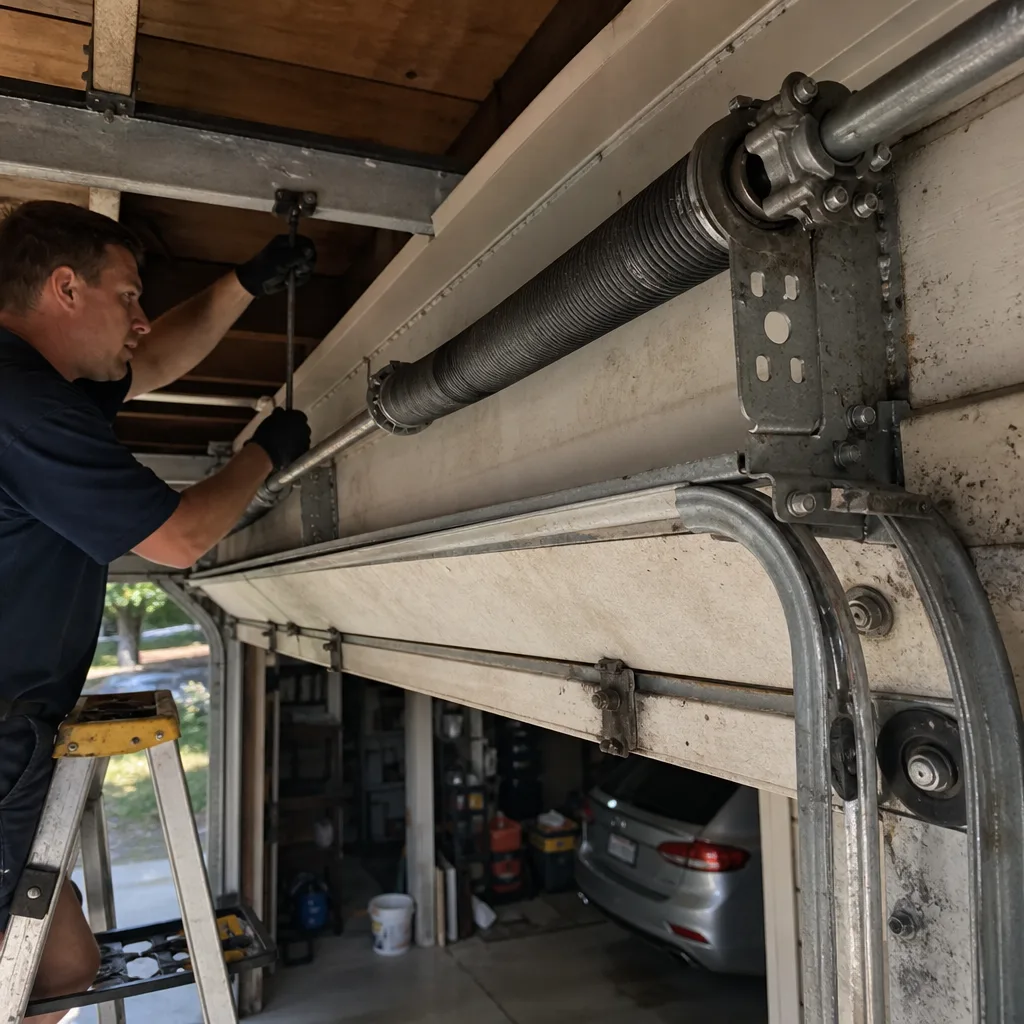
Your garage door springs are under extreme tension. A torsion spring on a double-wide door can be wound tight enough to lift 200 pounds or more. In Jacksonville, those springs face two enemies: salt air and cycle fatigue. Salt air accelerates surface rust on the spring coil. Surface rust by itself is mostly cosmetic. The problem is that rust becomes pitting, pitting becomes stress risers, and stress risers become fractures. A spring that breaks is not a slow failure. It is a sudden release of stored energy.
Cables are equally vulnerable. A cable made of galvanized steel strands begins to fray when individual strands corrode and snap. You can see the fraying if you look closely at the cable where it wraps around the drum and at the bottom bracket where it attaches to the door. Once a cable frays, the door lifts unevenly, which puts side pressure on the tracks and wears out rollers and hinges faster.
Here is a Jacksonville-specific reality: springs and cables need more frequent inspection here than in drier climates. We recommend a visual check every three months for homes within two miles of salt water, and every six months for homes further inland. Look for rust staining on the spring coil, frayed cable strands, and any gap or irregularity in the spring coils that indicates a developing crack.
Do not attempt to replace a torsion spring yourself. The stored energy in a wound spring can cause serious injury. Cable replacement involves the same tension system. This is where a trained professional earns their fee.
Opener Considerations: Battery Backup, Wi-Fi, and Jacksonville’s Power Outages
Jacksonville loses power for three main reasons: afternoon thunderstorms, hurricane landfalls, and grid strain during summer heat. Each of those scenarios is worse when your car is inside the garage. Without power, the opener will not run, and if you do not know how to operate the emergency release, you are not getting the car out quickly—see our Garage Door Emergency Preparedness Guide for Jacksonville Homes.
Since 2018, Florida Building Code has required battery backup on all newly installed residential garage door openers. That requirement exists because of exactly the scenarios Jacksonville faces. If you have an older opener without battery backup and you live in a neighborhood with frequent storm outages, the upgrade is worth considering, not as a luxury but as a reliability feature. A battery backup typically operates the door for 10 to 20 cycles after power loss, which is enough for normal use during a short outage.
Wi-Fi-enabled openers add a different layer of usefulness. If you are away from home when a storm rolls through, a Wi-Fi opener lets you confirm the door is closed from your phone. If it is open, you can close it as long as your home internet and the opener’s connection are working. If the power is truly out, Wi-Fi does not help, which is why battery backup and Wi-Fi solve different problems.
For opener repair in Jacksonville, the brands we work on most are LiftMaster, Chamberlain, Genie, and Raynor. Each behaves differently when a capacitor fails, a logic board overheats, or a travel limit drifts. Chamberlain and LiftMaster share a parent company and use similar safety sensor logic. Genie openers have a different screw-drive history that affects wear patterns. Raynor openers are less common but well-built, and finding a tech who knows them matters.
Our opener repair work includes troubleshooting smart-home integration, replacing gears and sprockets, realigning safety sensors, and reprogramming remotes and keypads. If your opener is more than 12 years old and the failure involves the motor or the board, replacement often makes more sense than repair, and we will tell you that plainly.
Sandy Soil, Slab Foundations, and Door Alignment in Jacksonville
Much of Jacksonville sits on sandy soil over limestone. Newer subdivisions in areas like Bartram Park, Oakleaf, and north of the airport are built on compacted fill that settles over time. Older neighborhoods in Riverside, Springfield, and Murray Hill have slabs that have been moving for 70 years or more. Both scenarios affect your garage door.
As the slab settles, the garage door opening changes shape. A door that was perfectly square when installed gradually binds on one side. The gap between the door and the jamb becomes uneven. The door rubs on the track, or the track itself shifts because its mounting brackets are anchored to a wall that is no longer in the same plane as the slab.
The first symptom is usually a door that hesitates or reverses on the way down. The second is visible wear on one roller or hinge. The third is a track bracket that has pulled loose from the wall. None of these symptoms means your foundation is failing. It means the door needs re-alignment to match the current shape of the opening.
In Jacksonville, re-alignment work often involves:
- Checking the gap between the door and the jamb on both sides at three points: top, middle, and bottom.
- Adjusting the track brackets to re-square the tracks to the door rather than to the original wall position.
- Re-balancing the door so the springs lift the changed load evenly.
- Replacing rollers that have developed flat spots from running on misaligned tracks.
This is a normal part of owning a garage door in Jacksonville. It is not a sign that your house is falling apart. But it does need to be addressed, because a misaligned door wears out every moving component faster.
A Jacksonville-Specific Maintenance Routine
Here is a maintenance routine built for Jacksonville’s climate. It takes about 30 minutes and requires no special tools beyond a can of garage door lubricant and a flashlight.
- Every three months: Inspect the springs for rust staining and coil gaps. Inspect the cables for fraying. Look at the track brackets for rust. If you live within two miles of the coast, do this monthly.
- Every three months: Lubricate the rollers, hinges, and springs with a lithium-based garage door lubricant. Do not use WD-40; it is a solvent, not a lubricant. Do not lubricate the track itself, just the moving parts.
- Every six months: Test the door balance. Pull the emergency release and lift the door manually. It should lift smoothly and stay in place at the halfway point. If it drops or rises on its own, the springs need adjustment.
- Every six months: Test the safety sensors. Lower the door and pass your foot through the beam. The door should reverse. If it does not, call for garage door opener repair in Jacksonville.
- Before hurricane season: Verify the battery backup on your opener and replace the battery if it is more than two years old. Confirm the door closes flush against the slab with no visible gaps at the bottom seal.
- After any severe storm: Check for water intrusion around the door perimeter. Inspect for debris lodged in the tracks. Operate the door twice and listen for grinding or scraping.
This routine will not prevent every failure, but it will catch most problems while they are still cheap to fix. A rusted spring that gets replaced before it breaks saves you a stuck door and a more expensive emergency call.
Common Mistakes to Avoid
- Using the wrong lubricant. WD-40 displaces water and cleans, but it does not lubricate garage door rollers or springs. It actually strips away the existing lubricant. Use a lithium or silicone spray made for garage doors.
- Ignoring a slow door. When a door starts moving slower than it did, something is changing. It could be spring fatigue, a failing gear in the opener, or misaligned tracks. Slow never gets faster on its own.
- Replacing springs without addressing the cause of rust. If salt air killed the first set of springs, the replacement set will fail on the same schedule unless the door gets more frequent inspection and lubrication.
- Painting over rust on steel panels. Rust on a steel door is like an iceberg. What you see on the surface is a fraction of the corrosion working through the panel. Sand and repaint only if the rust is surface-level and caught early. Otherwise, panel replacement is the real fix.
- Buying a new door without checking wind load requirements. A door that looks identical to your neighbor’s may not meet code for your specific lot. The wrong door creates problems at sale time and during heavy storms.
- Assuming all garage door companies in Jacksonville handle all brands. Many smaller operators specialize in one or two brands and make recommendations based on habit rather than what your specific door actually needs. If your door is a Raynor and the tech only knows Genie, the diagnosis may be a guess.
- Skipping the bottom seal replacement. This is the cheapest repair in garage doors and the one most often ignored. A $30 seal keeps out rain, leaves, vermin, and the humid air that rusts everything inside the garage.
When to Call a Professional
Call a professional when a spring breaks, when a cable frays, when the door comes off its tracks, or when the opener’s motor runs but the door does not move. These are not weekend DIY projects. The tension on a torsion spring can cause severe injury, and a door off its tracks can fall on whatever is underneath it.
Also call when you need a new door in Jacksonville. Wind load calculations, code compliance, and proper anchoring are not guesswork. A door that is not installed to the Florida Building Code requirement becomes a liability in the next hurricane, even if it looks and works fine on a sunny day. Main Street Garage Door Repair offers free estimates in Jacksonville; call (833) 467-4139 for an honest assessment of your door, your opener, and your options.
Frequently Asked Questions
Garage door repair in Jacksonville typically runs $120 to $350 depending on the problem, with spring replacement on the higher end of that range and roller or sensor fixes on the lower end. You will get an exact quote for your specific door and parts before any work begins. Call (833) 467-4139 for a free estimate in the Jacksonville area.
In Jacksonville’s humid, salt-exposed environment, torsion springs typically last 7 to 10 years or roughly 10,000 cycles, whichever comes first. Springs on doors used more than four times daily fail sooner. Regular inspection catches rust before it compromises the spring.
Yes. Duval County garage doors must meet Florida Building Code wind load requirements specific to your home’s location and design. A wind-rated door is a structural component that protects your home during hurricanes. Your installer should verify the rating for your specific property before ordering a door.
Yes, a door that has come off its tracks can usually be repaired without replacing the door, provided the panels and tracks are not bent beyond safe use. The repair involves restoring proper alignment, replacing damaged rollers, and checking that the springs still balance the door correctly. This is a professional repair due to the weight and tension involved.
Jacksonville’s combination of high humidity and salt air from the Atlantic accelerates corrosion on metal hardware compared to inland Florida cities. Homes east of the Intracoastal experience the fastest rust accumulation. More frequent lubrication and inspection are the defense.
Yes. Florida Building Code has required battery backup on new residential garage door opener installations since 2018. If you have an older opener, adding a model with battery backup is a practical upgrade for Jacksonville’s frequent storm-related power outages.
We work on doors and openers from LiftMaster, Chamberlain, Genie, Clopay, Amarr, Wayne Dalton, Craftsman, and Raynor. If you have one of those brands, call us at (833) 467-4139 and tell us what you are seeing; we will give you a straight answer.
The Bottom Line
Your garage door in Jacksonville lives in a tough environment. Salt air, humidity, sandy soil, and hurricane code requirements all shape how your door performs and how long it lasts. The homeowners who stay ahead of problems in this climate do three things: they inspect their springs and cables regularly, they maintain their door with the right lubricant on a real schedule, and they call a specialist who knows their specific brand before small problems become dangerous failures. Main Street Garage Door Repair handles garage door repair in Jacksonville, garage door installation in Jacksonville, and opener work on all eight major brands, from old Craftsman models to the latest smart LiftMaster openers. Whether you need a spring replaced, a door re-aligned, or a wind-rated installation, you will get one straight answer and one fair price, quoted before any work starts.
Written by the team at Main Street Garage Door Repair, serving Jacksonville since 2018. Explore more guides & resources.
See the difference
 Before
 After
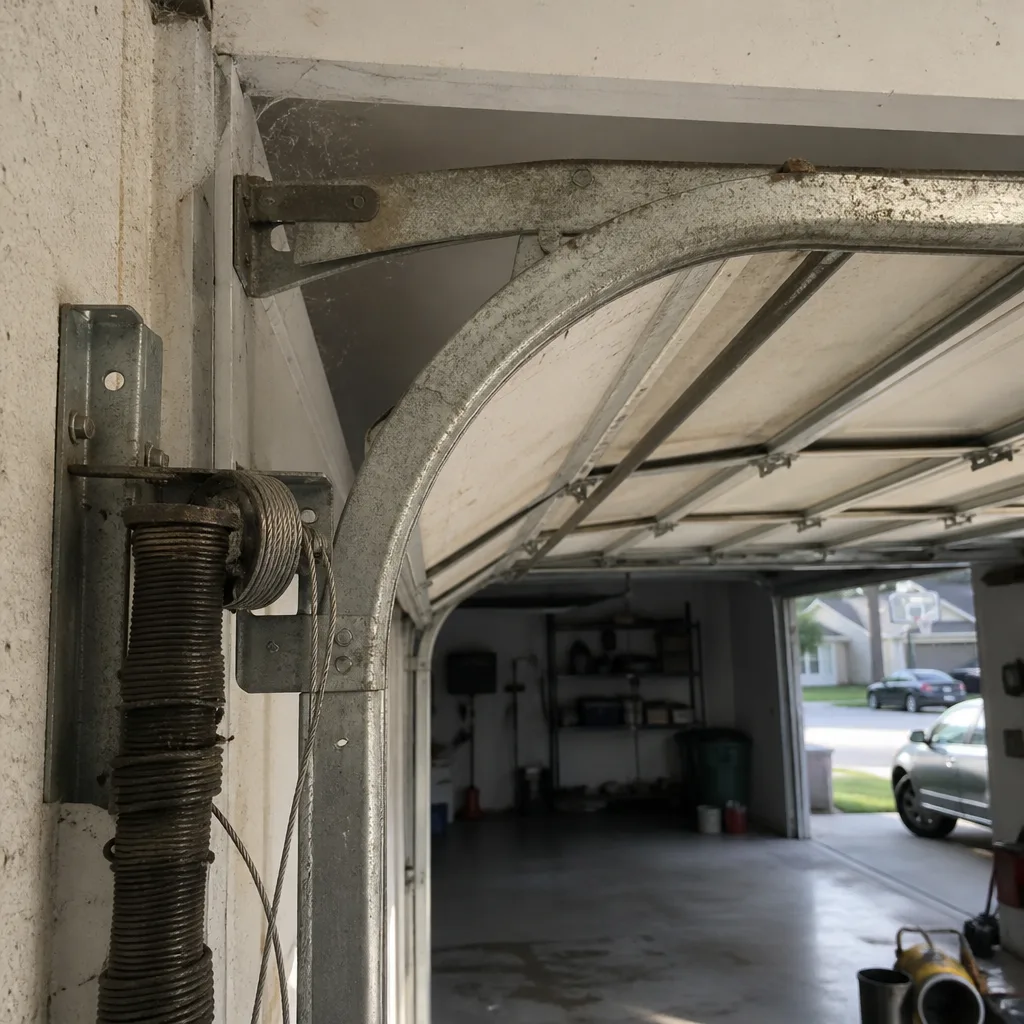 Before
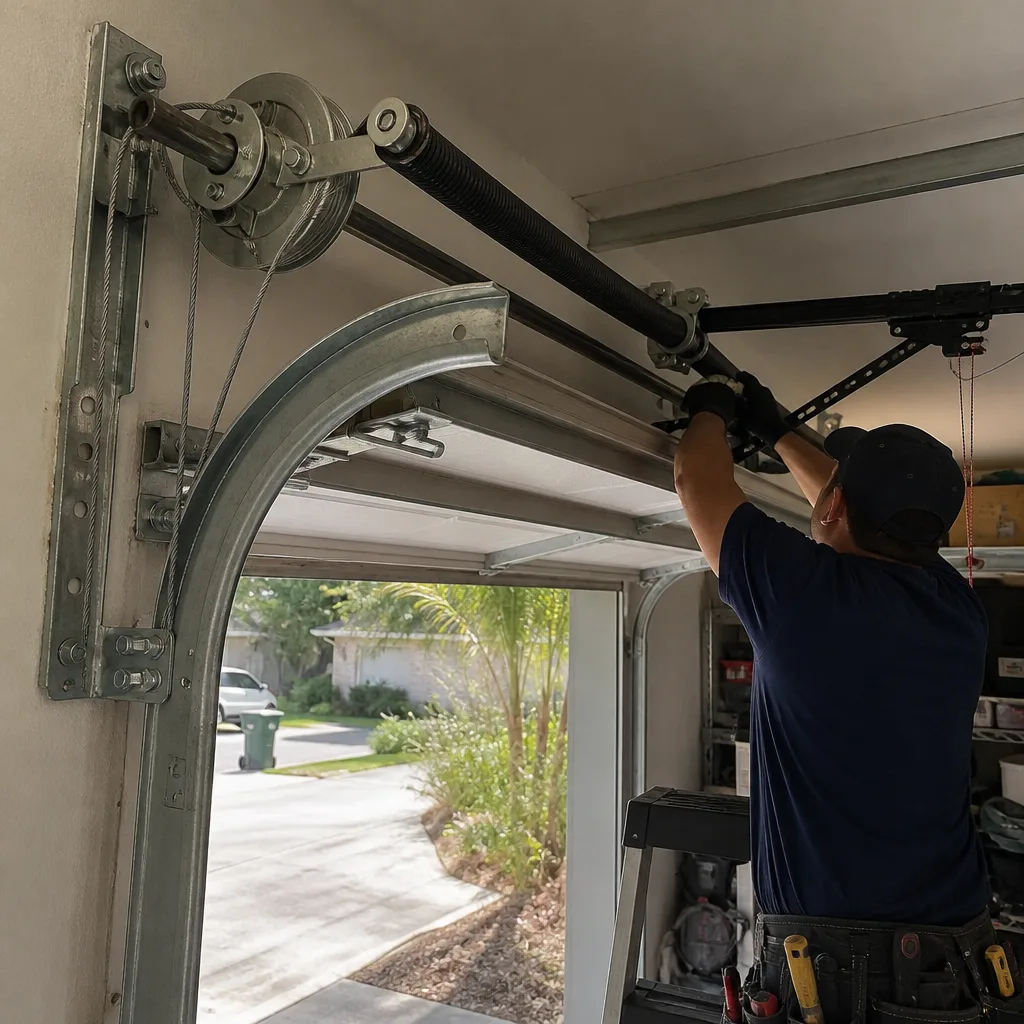 After
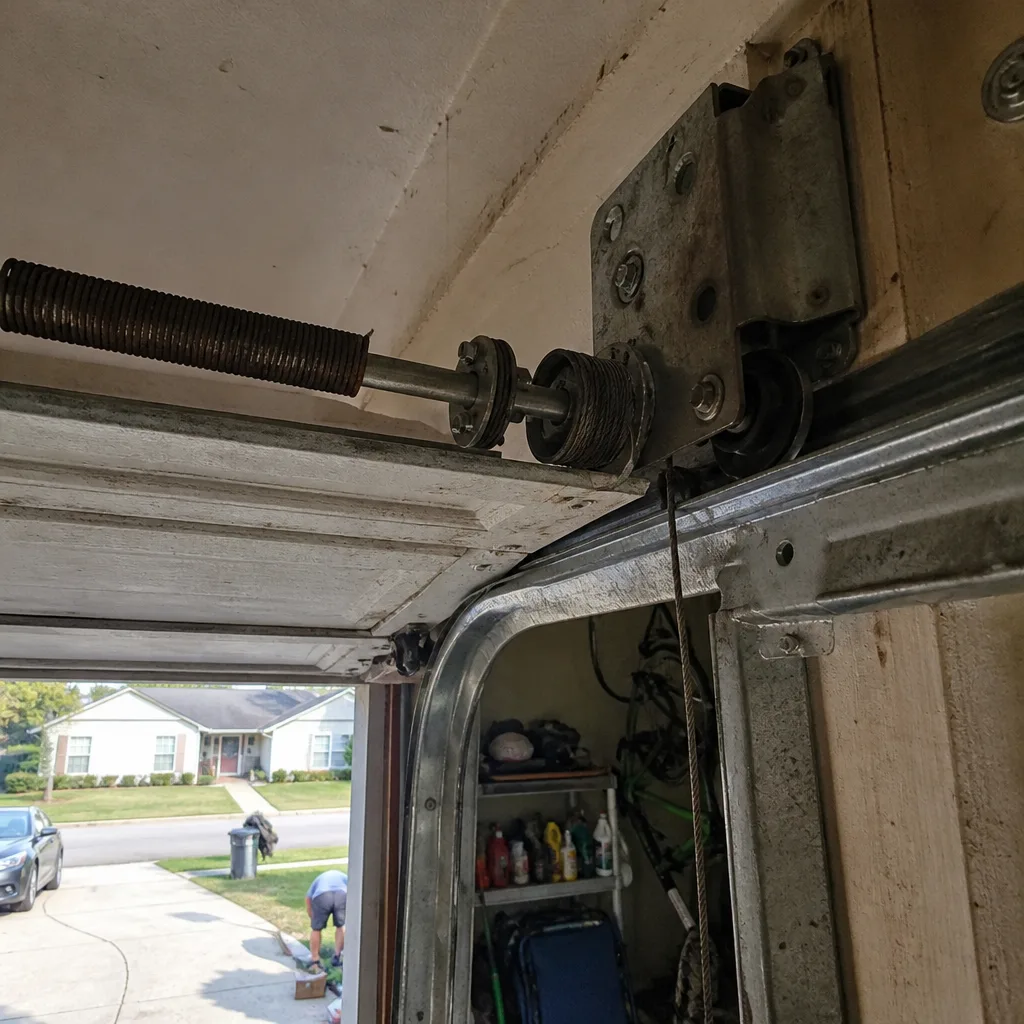 Before
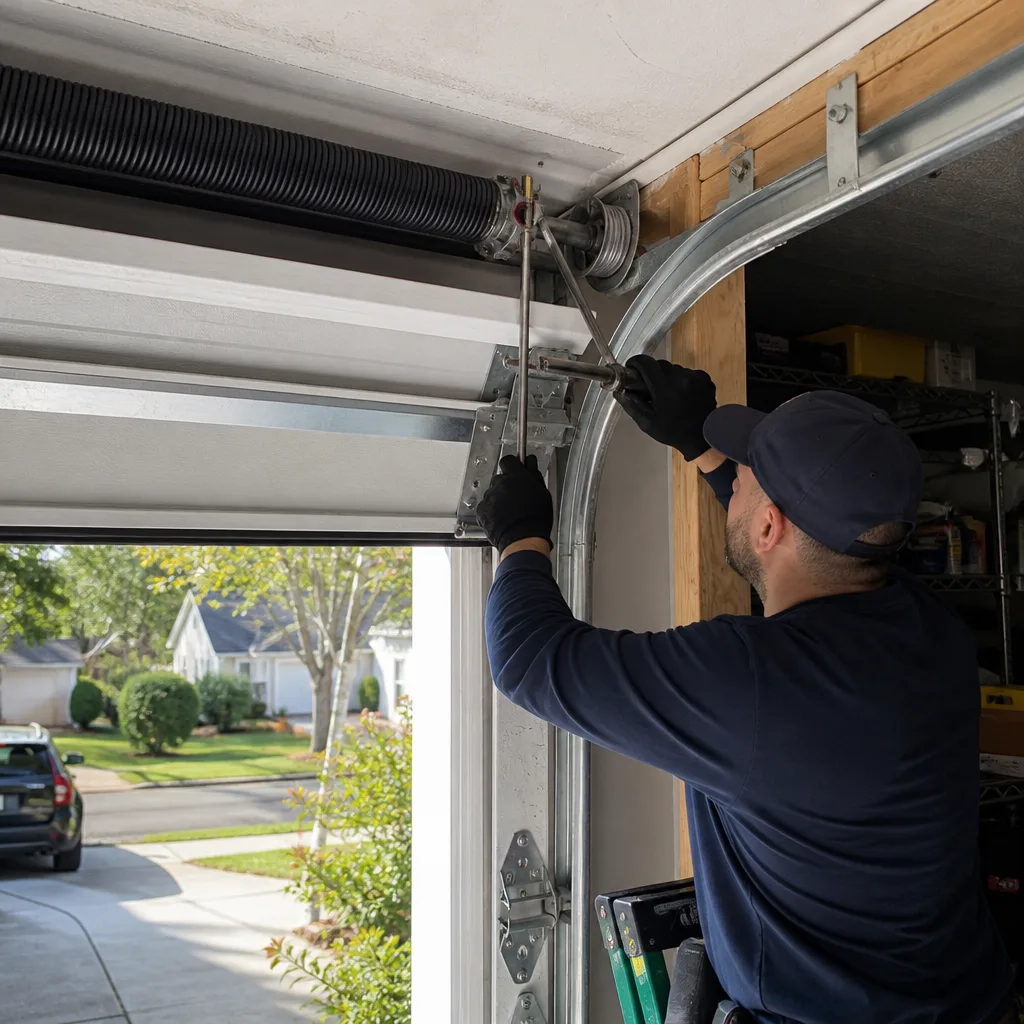 After